Address
304 North Cardinal St.
Dorchester Center, MA 02124
Work Hours
Monday to Friday: 7AM - 7PM
Weekend: 10AM - 5PM
Address
304 North Cardinal St.
Dorchester Center, MA 02124
Work Hours
Monday to Friday: 7AM - 7PM
Weekend: 10AM - 5PM


High-quality PVC film has become a go-to material for modern manufacturing and interior finishing because it blends design flexibility, durability, and cost efficiency. From furniture surfaces and wall panels to packaging, electronics protection, and cleanroom applications, PVC film can be engineered to deliver the exact look and performance you need—glossy, matte, embossed, transparent, soft-touch, anti-static, or self-adhesive.
This guide explains what makes PVC film “high quality,” where it’s used, and how to choose the right type for your project—whether you’re sourcing for cabinets, doors, flooring, appliances, advertising, or industrial conversion. For more product background and application tips, you can also browse the manufacturer’s resource center at
Knowledge.
✔ Quick takeaway:
A high-quality PVC film is not defined by thickness alone. It’s the combination of stable calendering, consistent color/pattern, controlled gloss, surface functionality (anti-static, anti-fog, oil-proof, etc.), and reliable QC traceability.
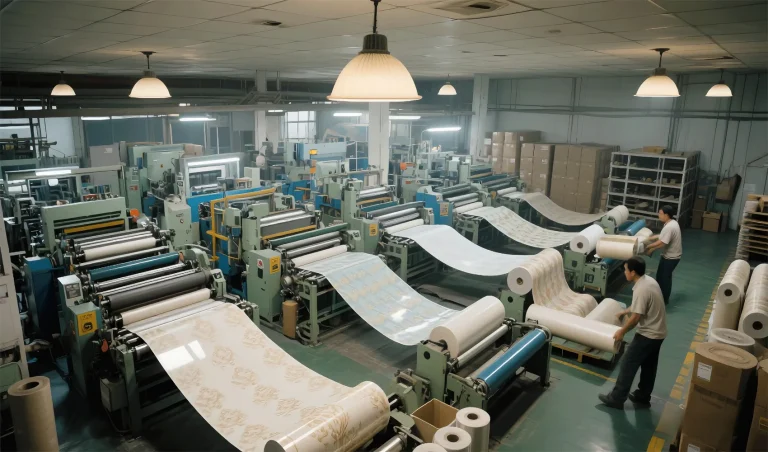
PVC film is a thin sheet made from polyvinyl chloride, produced through processes such as calendering, printing, and slitting/packaging. Quality is the result of how well every stage is controlled—raw materials, formulation, calendering stability, printing alignment, surface treatment, and final roll handling.
Tip for buyers:
Ask for batch traceability, test data (thickness, adhesion, optics), and details on ink system and surface treatment. High-quality suppliers can show QC checkpoints from raw material to finished roll.
“High quality” usually means the film performs well not only on day one, but after months or years of cleaning, handling, and environmental changes. Below are features that matter most across furniture, decoration, and industrial applications.
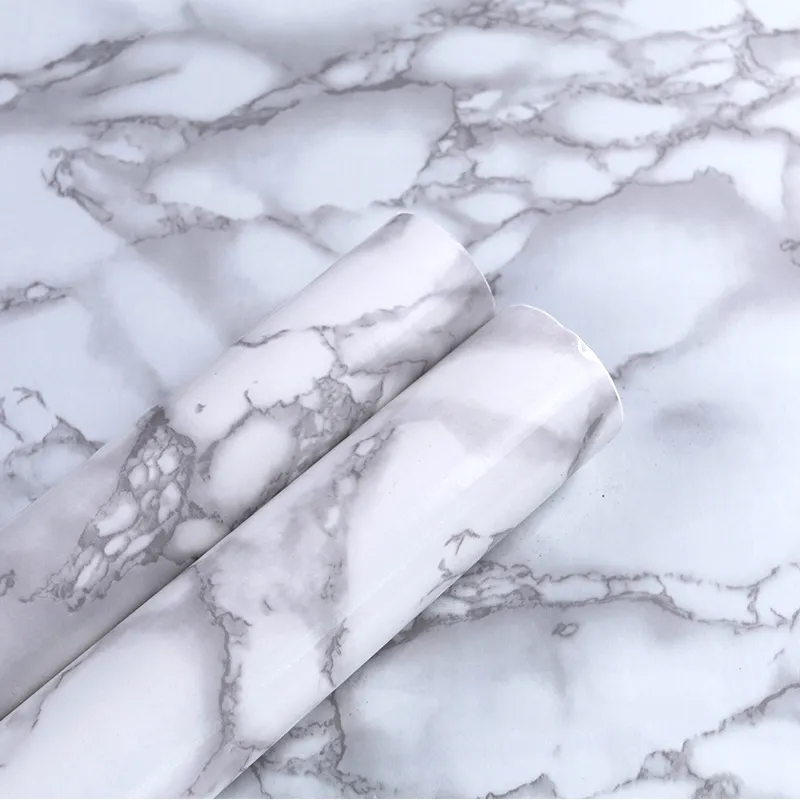
Decorative PVC films can replicate wood grain, stone, textile, metal, or pure-color design with impressive realism. Premium films show natural pattern flow, low color drift, and stable gloss. For specialty designs like layered sheen and tactile surfaces, options such as
3D Silk Texture Film
can elevate perceived value in cabinets, wardrobes, and display panels.
In high-touch environments—kitchen doors, office desks, hotel furniture—surface durability determines customer satisfaction. High-quality PVC film is engineered to reduce micro-scratches, resist stains, and remain stable against temperature/humidity swings.
Functional treatments solve practical problems: anti-static helps in electronics and dust-sensitive spaces; anti-fog helps on transparent applications; oil-proof and easy-clean surfaces support kitchen and commercial hygiene needs. The key is consistency—coatings must be uniform across the roll to avoid weak zones.
A premium film should run smoothly on your equipment—stable unwind, minimal telescoping, good lay-flat, and reliable adhesion. If you need a strong base film made with consistent calendering control, start with
Calendered Film
and specify the surface/printing performance you require.
🔎 Quality checkpoint list (practical):
Look (color/pattern), Feel (texture uniformity), Measure (thickness tolerance), Test (adhesion/scratch/stain), and Verify (standards + batch traceability).
Choosing the right film starts by matching surface appearance and functional performance to your end-use. Below are widely used categories, including decorative and industrial grades.
Beyond wall and furniture surfaces, PVC films are used for trims and protection layers. For example, skirting/baseboard finishing films protect edges and create clean transitions between walls and floors; see
PVC Skirting Film
for typical decorative finishing use-cases.
Flooring applications demand stronger abrasion resistance and stable dimensions. If your project involves vinyl flooring surfaces or protection films, purpose-built options such as
Floor Film
are engineered for foot traffic, cleaning cycles, and long-term wear.
A film that performs well on a wardrobe door may fail on flooring or kitchen cabinet doors. Differences in abrasion, heat, cleaning chemicals, and edge stress mean you should specify the film by application, not just by pattern.
Furniture buyers prioritize appearance matching (batch consistency), scratch resistance, and wrapping/lamination compatibility for MDF, plywood, or composite boards. Wood grain, cloth grain, and solid colors are common for cabinet doors, wardrobes, office desks, and tabletop surfaces.
Architects and contractors often need films with stable color under lighting, easy cleaning, and dependable installation behavior. For walls and partitions, decorative films help scale designs quickly across hotels, retail chains, and residential projects while keeping maintenance simple.
In electronics, a key concern is dust control and static management. Anti-static and protective films are used for surface protection and insulation layers, while brushed/metal-like decorative films enhance product aesthetics.
Signage, lightbox faces, and exhibition backdrops require uniform optics, good printability, and conversion-friendly rolls. Consistent thickness and flatness reduce wrinkles and improve visual impact under bright lighting.
Cleanroom environments demand stable, controlled materials and reliable QC. Depending on use, buyers may request special surface treatments, low odor, and compliance documentation. In these settings, consistency and traceability are as important as the film’s mechanical properties.
The easiest way to avoid mismatched materials is to define requirements in a structured order: application → substrate → process → appearance → performance → compliance → packaging/logistics.
PVC film behavior changes depending on whether you wrap profiles, vacuum press, hot laminate, cold laminate, or apply self-adhesive film. Provide your supplier with substrate details (MDF, plywood, metal, glass, plastic) and processing parameters so the film formulation and surface treatment are aligned with your line.
Specify gloss level (high gloss vs. super matte), emboss pattern depth, and visual targets (wood pores, stone veins, textile weave). For project-based purchasing (hotels, apartments, chain stores), ask for batch-to-batch color control and a clear standard for acceptance.
If your product ships to regulated markets or is used indoors, ask for relevant compliance claims (e.g., REACH, RoHS) and test reports. For buyers with corporate procurement rules, confirm ISO quality/environmental management systems and whether third-party verification is available.
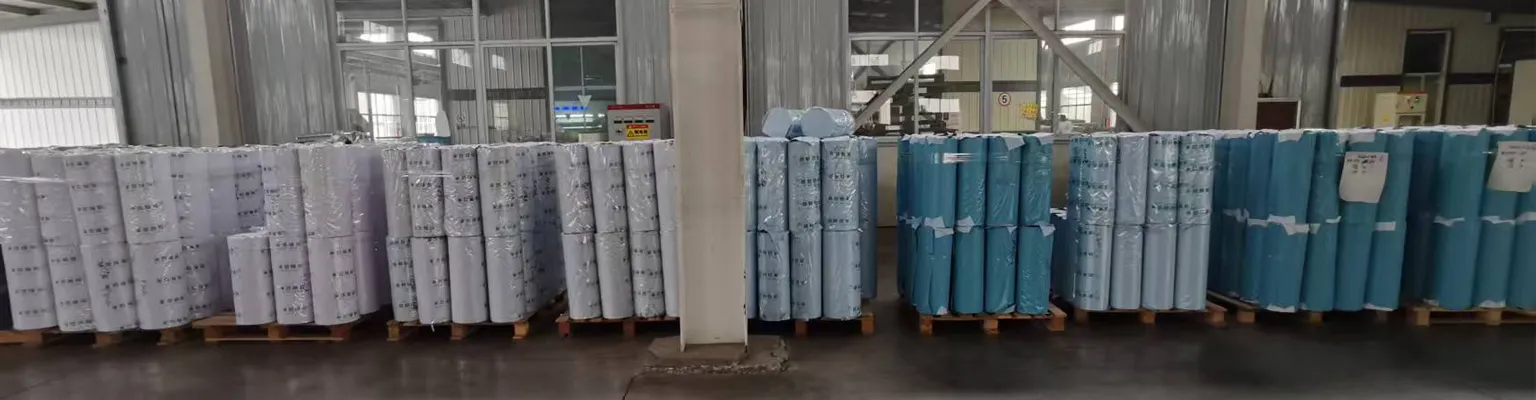
High-quality films can still be ruined by poor packaging. Best practice is individual roll wrapping with dust-proof PE film or kraft paper, clear specification labels, moisture protection, and export-ready cartons/pallets. This reduces scratches, edge damage, and contamination during transit.
Request two sample sets: (1) a small swatch set for design selection; (2) a process trial roll for your actual equipment. Approve based on line performance and end-use tests, not only appearance on a table.
Supplier capability matters as much as product specs. A manufacturer with integrated calendering, printing, and slitting/packaging can reduce lead times and keep quality consistent across steps.
If you need faster communication for sampling, quotes, or OEM details, use the official
Contact
page to share thickness, width, pattern, and quantity requirements.
PVC film is used for decorative surfaces (furniture, doors, wall panels), functional protection (electronics, packaging), and specialized applications such as anti-static or easy-clean surfaces, depending on the film type and coatings.
Choose glossy for a bright, premium look; matte to reduce fingerprints and glare; soft-touch for a modern tactile feel. Always test on your substrate under your real lighting conditions.
Yes. Many manufacturers offer OEM/ODM customization, including thickness, width, roll length, printed pattern, surface treatments (anti-static, anti-fog, oil-proof), and export-ready packaging.
Request compliance statements and test reports relevant to your market (commonly REACH/RoHS and ISO management systems), plus batch traceability and QC records for thickness, appearance, and adhesion.
Lead time and MOQ depend on whether the film is standard or customized, the pattern/printing complexity, surface treatment requirements, and the order quantity. Sampling and trial runs may add time for new developments.