Address
304 North Cardinal St.
Dorchester Center, MA 02124
Work Hours
Monday to Friday: 7AM - 7PM
Weekend: 10AM - 5PM
Address
304 North Cardinal St.
Dorchester Center, MA 02124
Work Hours
Monday to Friday: 7AM - 7PM
Weekend: 10AM - 5PM


High-quality PVC film is one of the most practical surface and functional materials used today—covering everything from furniture finishing and interior décor to electronics protection, clean packaging, and advertising displays. The right film can dramatically improve appearance, durability, cleaning convenience, and overall product consistency at scale.
Quick takeaway:
When choosing PVC film, match manufacturing process (calendered/laminated), surface (gloss/matte/embossed/soft-touch), functional treatment (anti-static/anti-fog/food-grade), and specs (thickness/width/roll length) to your application—not just the look.
PVC film is a thin sheet made from polyvinyl chloride designed for decorative, protective, and industrial uses. Depending on formulation and processing, PVC film can be rigid or flexible, transparent or opaque, smooth or textured, and can also be engineered with coatings to provide anti-static, anti-fog, abrasion resistance, or easy-clean performance.
In real-world production, PVC film is commonly applied by lamination, wrapping, vacuum pressing, flat pressing, or self-adhesive installation. For manufacturers, it offers a consistent surface finish that helps standardize product quality across batches—especially for furniture panels, doors, wall décor, skirting, flooring, and appliance surfaces.
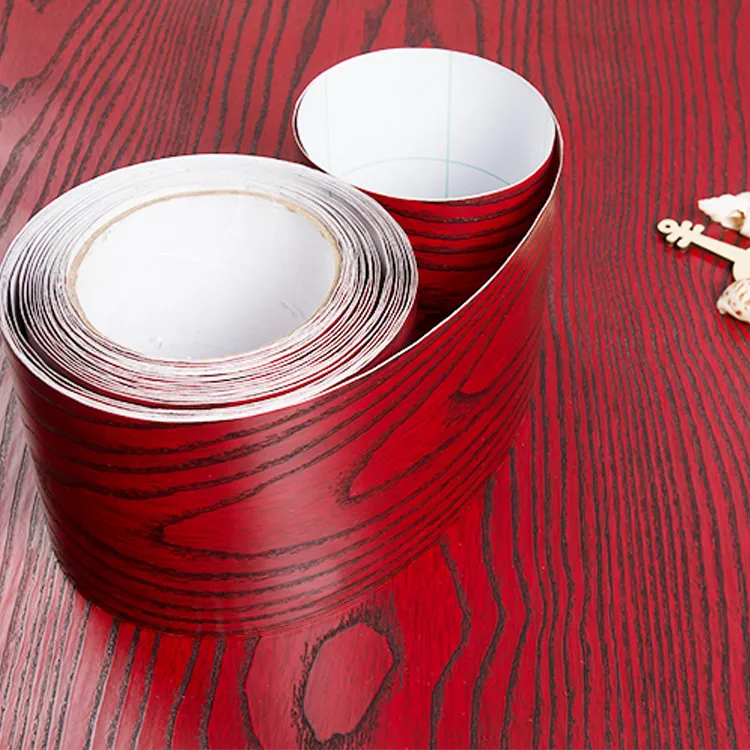
PVC decorative films (wood grain, marble, fabric texture, solid color, soft-touch) are widely used for cabinet doors, wardrobes, tabletops, and office furniture. They deliver a stable look while improving scratch resistance and daily cleanability.
Popular options include Wood Grain Film and Glossy Wardrobe Film for modern, high-reflection surfaces.
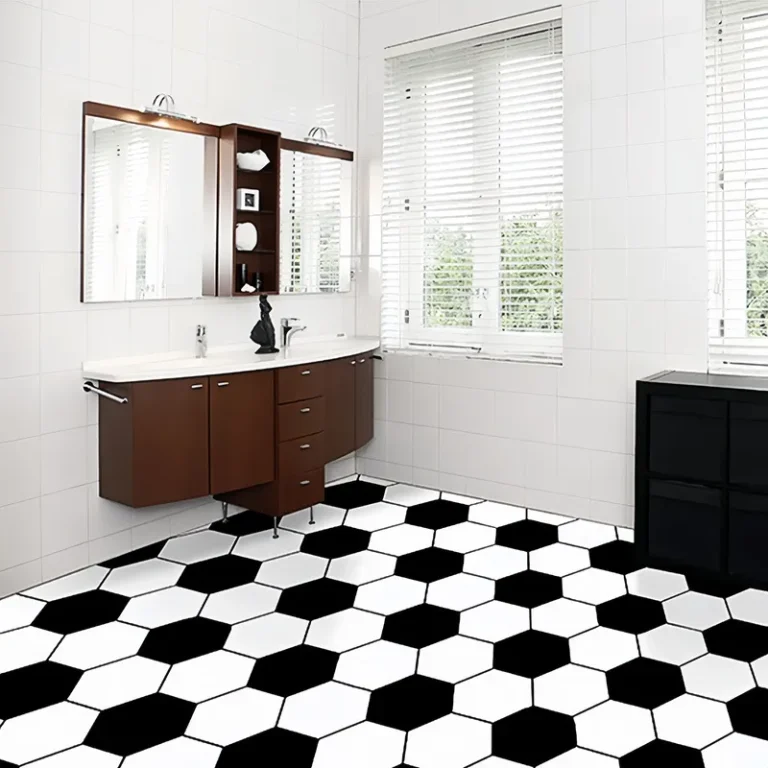
PVC films are used for wall panels, partitions, ceilings, skirting lines, and decorative wrapping on doors and frames. Textures such as stone, brushed metal, or 3D embossing support consistent design across large commercial projects.
For high-end tactile effects, 3D Silk Texture Film is often selected; for details and edge finishing, PVC Skirting Film helps unify the whole room style.
Anti-static and protective PVC films are used to reduce dust attraction, protect sensitive surfaces, and offer insulation benefits. Brushed textures and matte finishes also help hide fingerprints and minor scuffs on appliance panels.
Printable and laminated PVC films are applied to display boards, lightbox surfaces, signage, and event backdrops—where color stability, smoothness, and consistent thickness are critical for high-quality graphics.
Clean packaging films and protective sheets can be made with controlled surface properties and compliant material choices, supporting hygienic handling and stable roll-to-roll performance.
High-quality films deliver stable color, uniform gloss, consistent embossing depth, and repeatable patterns—reducing rework and mismatch issues across production batches.
Stable thickness, controlled shrinkage, and predictable adhesion behavior help maintain line speed and reduce waste in lamination, wrapping, and vacuum pressing.
A better film structure improves scratch resistance, stain resistance, and long-term appearance—especially for kitchens, high-traffic furniture, and commercial interiors.
In regulated or export markets, choosing films with available compliance references (e.g., REACH, RoHS, FDA where applicable) reduces supply chain risk and speeds approvals.
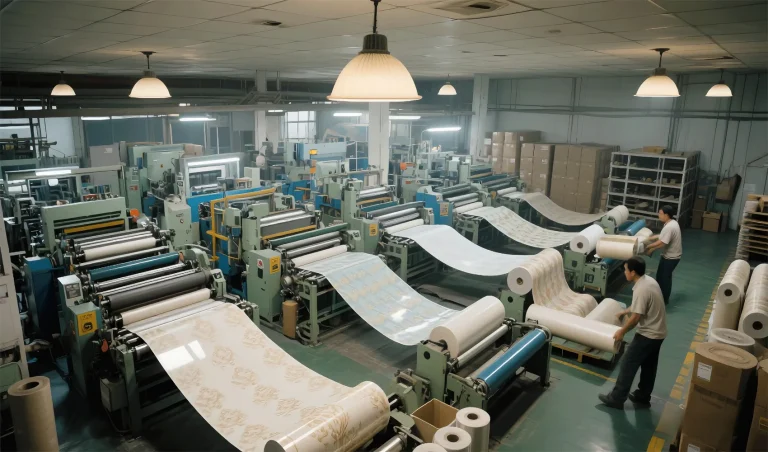
Calendered film is produced by rolling molten PVC through precision rollers to achieve a uniform sheet with consistent thickness and stable mechanical properties. It’s widely used for decorative wrapping, lamination, printing, and industrial applications.
You can explore a typical category example here: Calendered Film.
Decorative PVC film focuses on surface aesthetics—grain clarity, pattern repeat accuracy, and realistic texture. It can imitate premium materials while controlling cost, weight, and maintenance. Marble patterns are popular for modern interiors and retail fixtures; wood grain remains the classic option for furniture manufacturing.
Soft-touch surfaces are selected for high-end cabinetry, consumer products, and premium interior panels. Matte finishes reduce glare and visually hide fingerprints, making them suitable for office environments, showrooms, and household cabinetry.
Transparent films are used for protective layers, packaging, and overlays; frosted films provide privacy and diffusion. Functional treatments—such as anti-static or anti-fog—address specific environments like electronics handling or high-humidity spaces.
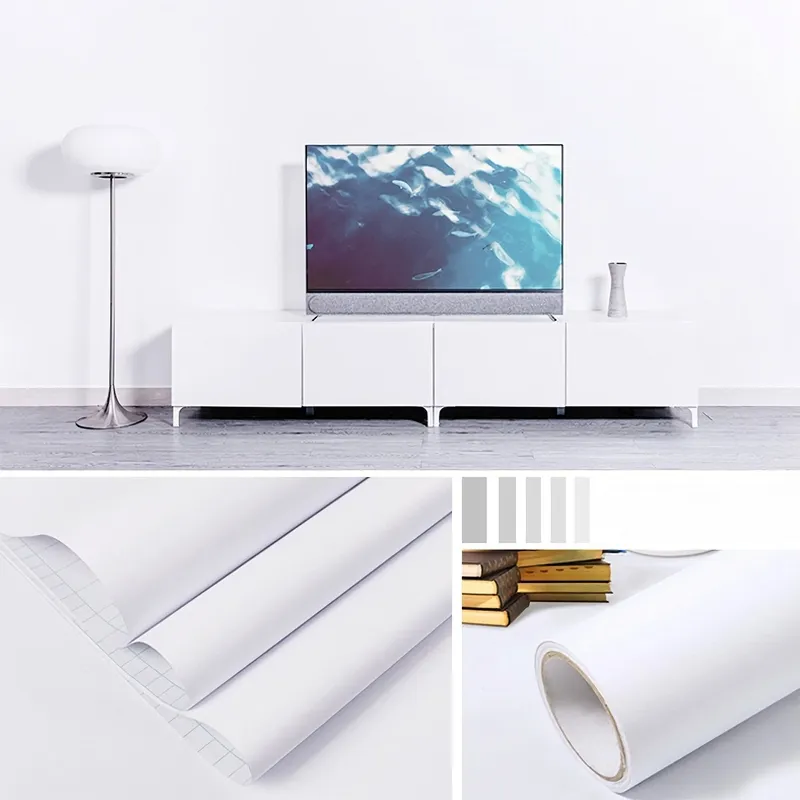
Self-adhesive PVC films simplify installation and retrofits. They’re often used for quick décor updates, signage, or surface protection, where consistent adhesive performance and clean removal behavior (if required) are important.
Thickness impacts stiffness, embossing definition, and durability. Thicker films often provide better coverage and wear resistance, while thinner films may be preferred for tight wrapping or cost-sensitive applications.
Match roll format to your equipment (lamination lines, wrapping machines, cutting systems). Improper roll sizing causes downtime and material waste.
Glossy finishes emphasize color depth but show scratches more easily; matte surfaces reduce glare; embossed textures enhance realism and help mask minor wear.
For furniture panels and architectural wrapping, confirm pattern repeat length, grain direction, and color tolerance across batches—especially for large projects.
Verify bonding performance with your substrate and adhesive system (MDF, particleboard, metal, PVC boards, acrylic panels). Consider heat resistance and aging behavior to avoid edge lifting or bubbles.
Choose treatments based on real usage: anti-static for electronics, anti-fog for humidity-prone environments, food-grade coatings for relevant packaging, or special topcoats for abrasion resistance and easy-clean performance.
Ask what the surface will face daily: heat (kitchens), moisture (bathrooms), abrasion (commercial fixtures), fingerprints (appliances), or chemical cleaners (healthcare and public spaces). The environment determines topcoat choice and base film toughness.
Pick pattern and gloss level that match the project: wood grain for warm residential looks, stone or marble for modern retail and hospitality, matte or soft-touch for premium minimalism, or high-gloss for contemporary cabinetry.
If you wrap profiles or edges, check flexibility and thermoforming behavior. If you laminate flat panels, prioritize thickness stability and adhesive compatibility. For self-adhesive applications, confirm initial tack, long-term holding power, and residue performance.
Finalize thickness, width, roll length, embossing, and treatment. Then request samples to test: adhesion, heat behavior, scratch resistance, and cleaning performance using your real production settings—not just lab conditions.
A reliable supplier should provide stable mass production, traceable QC, flexible slitting/packaging, and OEM/ODM support for custom colors, patterns, and functional coatings—while keeping delivery predictable.
High-quality PVC film is not only about appearance. It’s built on process control—from calendering and printing to slitting and protective packaging. Strong suppliers typically maintain internal inspection standards across raw materials and finished rolls, including thickness uniformity, optical performance, surface defects, adhesion behavior, and batch traceability.
Even a premium PVC film can lose performance if it’s stored incorrectly. Rolls should be protected from dust, moisture, and pressure deformation during transit and warehousing. Individually wrapped rolls and labeled specifications help avoid mixing batches or using the wrong side/finish.
If you need consistent brand colors, unique textures, or special functions, OEM/ODM customization can be a competitive advantage. Typical customization includes thickness, width, roll length, embossing patterns, printing design, surface gloss level, and functional coatings such as anti-static or anti-fog. Export-ready packaging and stable lead times are also key for international projects and multi-site manufacturing.
For reference on broader product categories and selection resources, you can review the supplier knowledge center at
https://pvcfilmtec.com/knowledge/.
The most common uses include furniture decoration (cabinets, wardrobes, panels), interior décor (walls, skirting, partitions), protective layers for appliances/electronics, advertising displays, and industrial/clean packaging applications.
Choose glossy for high visual impact and deeper color; choose matte for lower glare and better fingerprint/scratch concealment. In high-touch areas (kitchens, appliances), matte or soft-touch is often preferred.
Yes. Many manufacturers offer OEM/ODM options including thickness, width, roll size, printing/color matching, embossing, and functional coatings (anti-static, anti-fog, food-grade where applicable).
Common requests include ISO management systems and material compliance references such as REACH and RoHS. If the film is used for specific packaging or contact scenarios, ask whether an FDA-scope solution is available and request relevant test reports.
Send film type, thickness, width, roll length, surface finish (gloss/matte/embossed), color or pattern reference, functional requirements, application method, and target quantity. This helps the supplier match the correct structure and production route.