Address
304 North Cardinal St.
Dorchester Center, MA 02124
Work Hours
Monday to Friday: 7AM - 7PM
Weekend: 10AM - 5PM
Address
304 North Cardinal St.
Dorchester Center, MA 02124
Work Hours
Monday to Friday: 7AM - 7PM
Weekend: 10AM - 5PM


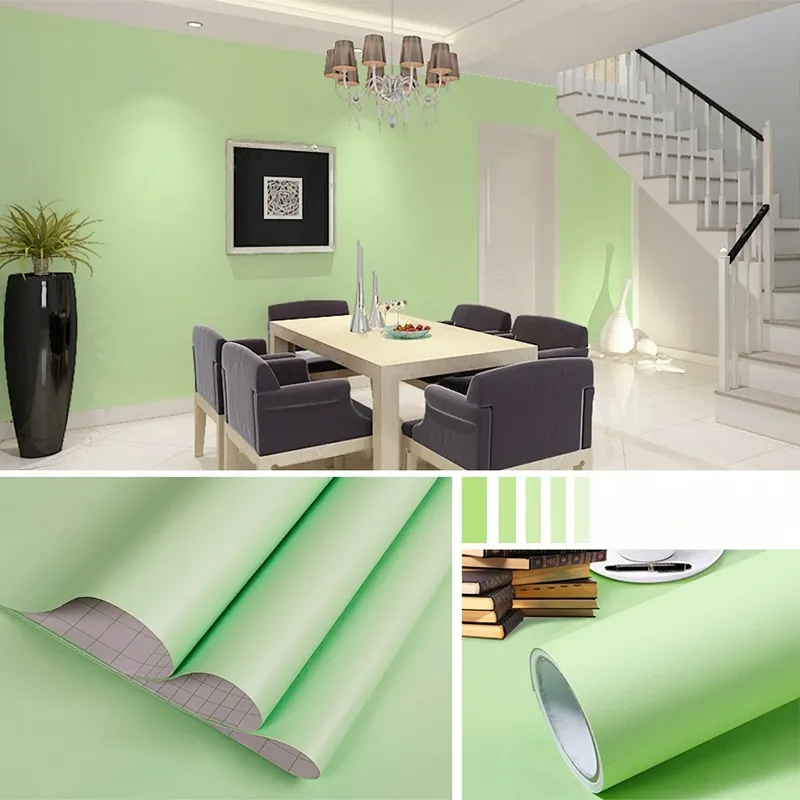
Adhesive PVC film (also called self adhesive PVC sheet) is a versatile, cost-effective surface solution used to upgrade furniture, walls, doors, appliances, and many other substrates without heavy renovation. It combines a decorative PVC layer with a pressure-sensitive adhesive backing, so installers can apply it quickly with basic tools and minimal downtime. For commercial spaces, rental properties, and fast-turn interior projects, it offers an attractive balance of aesthetics, protection, and speed.
Key takeaway:
Adhesive PVC film is not “just a sticker.” The best options are engineered films with controlled thickness, stable calendered bases, durable topcoats, and adhesive systems matched to the substrate and environment.
If you want to explore PVC film categories first, start from
Pulivk Film Product
and then narrow down by texture, finish, and functional coatings.
Adhesive PVC film is a thin polyvinyl chloride layer laminated or coated with an adhesive backing and protected by a release liner. Once the liner is removed, the film can be applied to a prepared surface using pressure, squeegees, and (when needed) moderate heat. Depending on the product design, it can be repositionable for easier installation or aggressively tacky for long-term bonding.
Many interior-grade films are based on calendered PVC (a process that controls thickness and surface uniformity), which is widely used in decorative and industrial applications. You can reference
Calendered Film
to understand why stable base films matter for flatness, print clarity, and consistent roll quality.
Ideal for cabinet doors, wardrobes, tabletops, and office furniture. Wood grain, solid color, glossy, matte, and soft-touch finishes can change the entire look while adding scratch and stain resistance.
A popular option for realistic patterns is
Wood Grain Film.
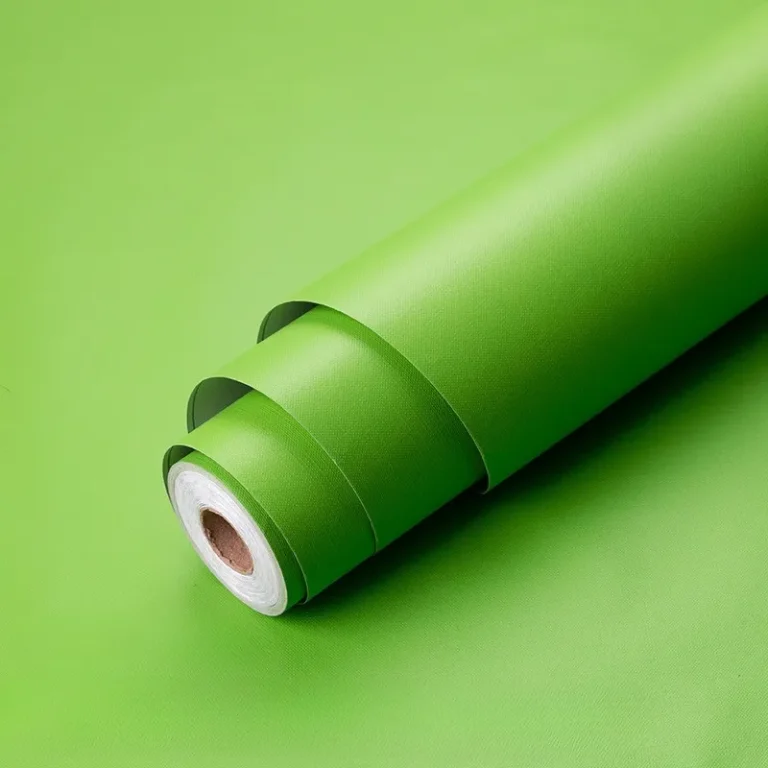
Suitable for feature walls, partitions, display panels, and interior remodeling where repainting is messy or time-sensitive. For clean, modern aesthetics, consider
Solid Color Wallpaper
styles in PVC film form.
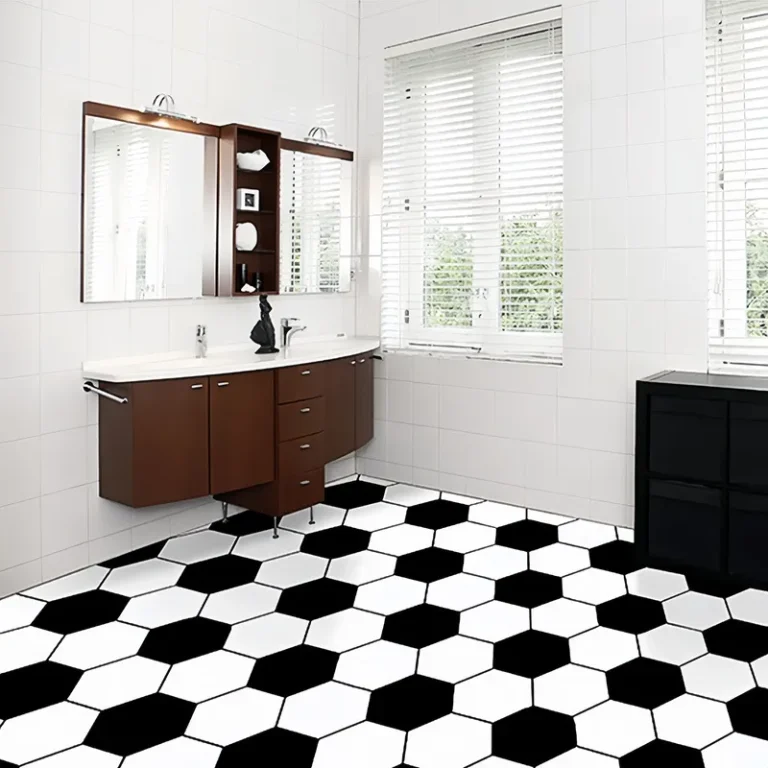
Certain PVC films are engineered for flooring overlays or protection layers, emphasizing abrasion resistance and easy cleaning. If your project is flooring-related, compare specifications with
Floor Film
solutions (especially for commercial maintenance schedules).
Skirting and edge lines are easily scuffed; applying a durable decorative film can keep them looking sharp. For purpose-oriented options, see
PVC Skirting Film.
Because installation is dry and tool-light, many projects can be completed while a space stays partially operational—useful for offices, hotels, retail, and residential refreshes.
Decorative PVC films cover a wide spectrum: wood grain, stone, metal, pearlescent, brushed, embossed, matte, glossy, and even 3D tactile textures. This flexibility helps match brand identity, interior themes, or furniture collections.
A quality film acts as a sacrificial wear layer against light scratches, splashes, fingerprints, and daily abrasion—especially helpful on doors, counters, and public-facing fixtures.
Refacing with adhesive PVC film often costs far less than replacing cabinetry, panels, or decorative boards. It also reduces labor, material waste, and lead time.
For manufacturers and brand owners, film specs can be aligned with product lines: thickness, width, roll length, printing, embossing, surface treatments (e.g., anti-static), and packaging labels for traceability.
Choosing the right film is a technical decision as much as a visual one. Below is a practical selection checklist that helps avoid common failures like edge lifting, bubbles, shrinkage, or premature wear.
✔ Substrate: MDF, laminate, metal, glass, plastic, painted surfaces—each needs different adhesion behavior.
✔ Environment: temperature swings, humidity, kitchen oil exposure, UV light, abrasion level.
✔ Finish: gloss vs matte vs embossed (embossing can hide minor substrate defects better).
✔ Thickness & hand feel: thicker films often install more easily and resist minor impacts.
✔ Adhesive type: initial tack, repositionability, long-term holding power, residue risk.
Not all adhesive PVC films are built the same. For premium interior finishing, prioritize a stable base (often calendered), consistent thickness across the roll, and a protective top layer that fits the performance target (scratch resistance, stain resistance, or soft-touch feel). If your application requires deeper tactile realism (e.g., high-end cabinets or boutique retail displays), textured options can provide more depth than flat prints.
Adhesive behavior is a major determinant of success. High initial tack helps on difficult substrates but can reduce repositioning time. A more forgiving adhesive can improve installation quality on large panels but still needs enough long-term strength to prevent lifting.
Tip:
If you’re covering edges, corners, or routed cabinet profiles, test whether the film can conform with moderate heat without whitening, cracking, or spring-back.
Finish impacts both appearance and everyday cleaning. Glossy films can look luxurious but reveal scratches and fingerprints more easily. Matte finishes reduce glare and often feel more contemporary. Embossed textures can hide substrate imperfections and elevate realism in wood, fabric, or stone patterns.
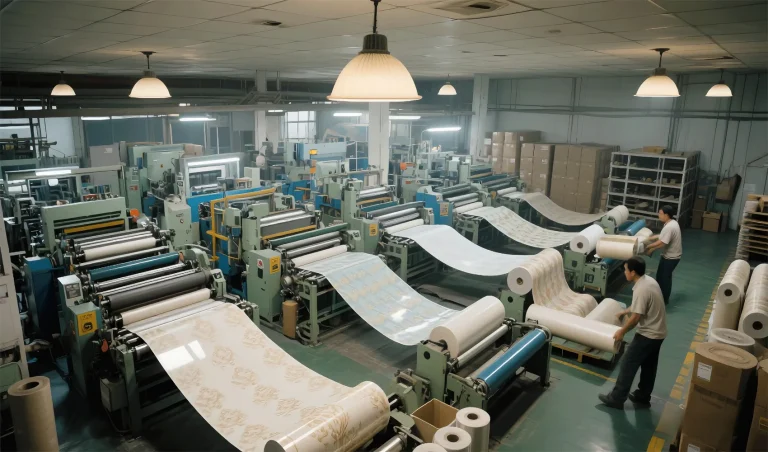
For installers and factories alike, roll consistency saves time. Uneven thickness can cause visible shading, inconsistent emboss depth, or adhesion variation. Choose a supplier capable of end-to-end process control (calendering, printing, slitting, and packaging) to reduce batch variation and shorten lead time.
For indoor projects and products that may involve human contact, request compliance information and relevant test reports. Many professional-grade PVC films are designed to meet common international requirements (such as REACH/RoHS and quality management standards) and may offer additional functional coatings like anti-static or anti-fog depending on the use case.
Even premium film can fail if the substrate is poorly prepared. Most installation issues come from dust, oil contamination, moisture, or uneven surfaces rather than the film itself.
Clean thoroughly, remove wax/oil, and ensure the surface is dry. Fill dents and sand for smoothness. On porous boards, consider compatible primers if needed to stabilize the surface.
Align first, then apply gradually while squeegeeing from center to edges to push out air. For corners and curves, use controlled heat and consistent pressure to avoid overstretching.
Avoid harsh solvents and abrasive pads. Let adhesion build fully before heavy use, especially in cool environments where adhesives can set more slowly.
● Edge lifting: often caused by dust/oil, low surface energy plastics, or insufficient post-heating on corners.
● Bubbles: usually from trapped air or applying too quickly without proper squeegee technique.
● Wrinkles/stretch marks: common when overheating or pulling the film too aggressively during conforming.
● Pattern mismatch: avoid by planning cuts and confirming repeat lengths for wood or marble designs.
If you’re purchasing for manufacturing, contracting, or distribution, the supplier’s capability matters as much as the film’s appearance. A producer with integrated calendering, printing, and slitting/packaging can provide better control over lead time and batch consistency—especially for ongoing projects and OEM programs.
1) Can you provide batch traceability and QC records (thickness, adhesion, surface defects)?
2) What surface treatments are available (anti-static, anti-fog, special topcoats)?
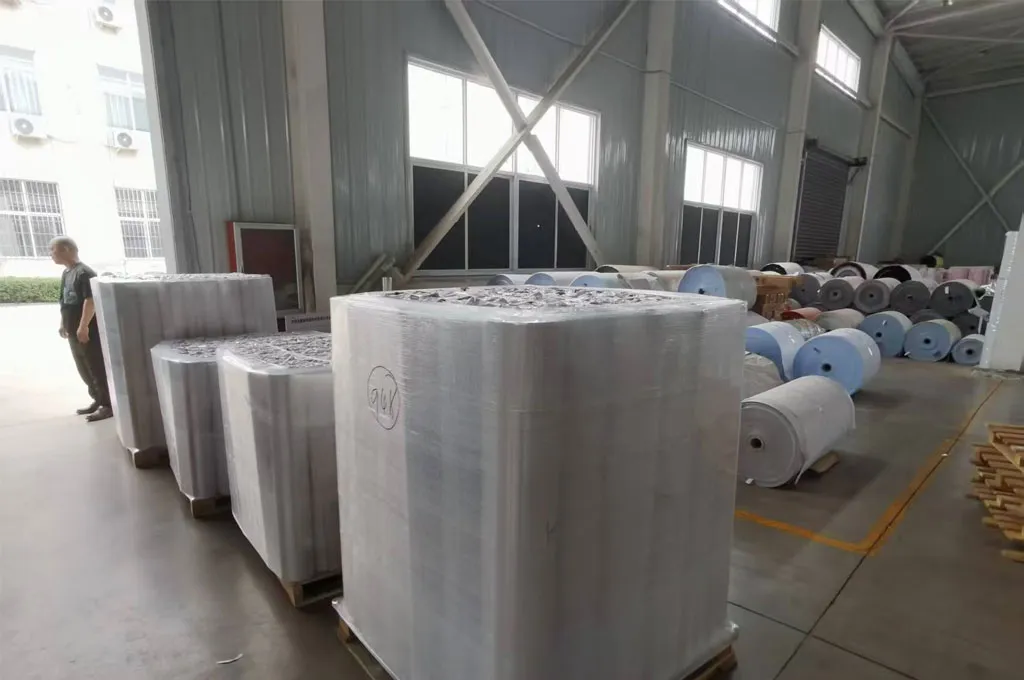
3) How do you pack rolls for export (dust-proof wrap, kraft protection, labeling)?
4) Can you support OEM/ODM customization (color matching, embossing, printing, widths)?
For company background, capabilities, and service scope, you can also check
About Us
and for ordering guidance or technical clarifications visit
FAQ.
Yes, if you choose a film designed for moisture, cleaning, and temperature changes. Focus on surface preparation and select an adhesive/topcoat combination intended for humid or splash-prone zones.
Often yes, as long as the surface is clean, stable, and non-chalking. Light sanding and proper degreasing improve bonding, especially on glossy paint or low-energy plastics.
Apply gradually, use a felt squeegee from the center outward, and keep the substrate dust-free. On large panels, work in sections and avoid stretching the film.
It depends on the adhesive strength, dwell time, and substrate. Proper heat-assisted removal reduces residue risk, but weak paint layers or low-quality substrates may peel if not well bonded to their base.
Share the application, substrate type, required thickness/width/roll length, finish (matte/gloss/emboss), color or pattern reference, and estimated quantity. For samples or pricing requests, use
Contact.