Address
304 North Cardinal St.
Dorchester Center, MA 02124
Work Hours
Monday to Friday: 7AM - 7PM
Weekend: 10AM - 5PM
Address
304 North Cardinal St.
Dorchester Center, MA 02124
Work Hours
Monday to Friday: 7AM - 7PM
Weekend: 10AM - 5PM


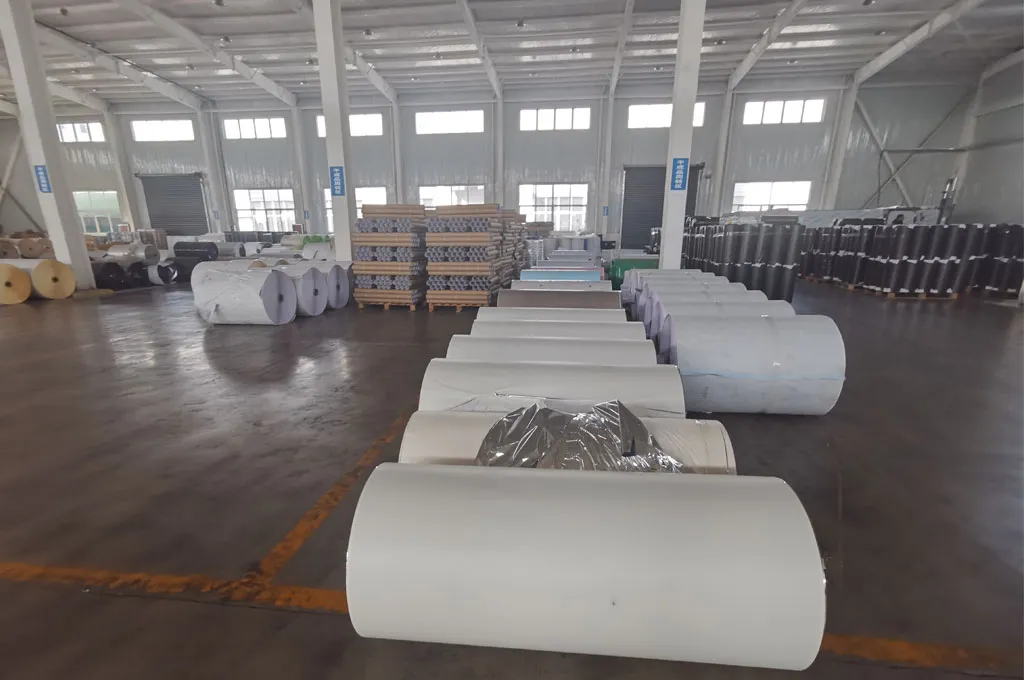
Wood PVC film is a decorative wrap designed to reproduce the look and feel of real wood while delivering the practical advantages of modern polymer surfaces. For furniture makers, panel fabricators, and interior contractors, it offers a consistent “wood” appearance, stable supply, and surfaces that are easier to maintain than veneer or solid timber. This guide explains how wood PVC film works, where it performs best, and how to choose the right specification for cabinets, doors, wall panels, and more.
Key idea:
Wood PVC film is not just a printed pattern. Performance depends on the base film type (calendered or decorative), surface finish, emboss depth, and compatibility with your substrate and adhesive.
★ Choosing correctly reduces edge lifting, whitening, bubbling, and color mismatch across batches.
Wood PVC film is a thin sheet of polyvinyl chloride engineered for surface finishing. It is commonly supplied in rolls and applied to boards such as MDF, particle board, plywood, WPC, or metal panels to create a wood-grain appearance. Depending on the product line, it may be used for flat lamination, membrane pressing (3D wrapping), or profile wrapping on edges and moldings.
Many manufacturers rely on calendered film structures because they offer stable thickness control and reliable processing for industrial lamination. For more design-forward projects (silk-like tactile textures, premium interior panels), specialty films can add distinctive surface touch and depth.
Compared with natural veneer, PVC film provides repeatable grain direction, color, and tone. This matters when you must match cabinet doors, drawer fronts, side panels, and end panels across multiple batches or multiple factories.
Quality wood PVC films are designed for scratch resistance, stain resistance, and moisture tolerance. For kitchens, rentals, hotels, and office fit-outs, this translates to easier cleaning and fewer callbacks.
Roll-to-roll supply supports automation and high throughput. You can reduce sanding, staining, and rework commonly seen with timber surfaces—especially when the project requires uniform tone under mixed lighting.
Wood PVC film ranges from classic oaks and ash to deep walnut, smoked tones, and contemporary straight grains. Embossed textures can mimic open-pore wood, while matte or low-sheen surfaces reduce fingerprints and glare.
Wood PVC film is widely used across furniture and interior construction because it can be matched to different substrates and processing methods. Below are typical applications—and what to pay attention to in each.
Cabinet doors often face frequent contact, cleaning, and occasional heat exposure. A matte or soft-matte wood grain helps hide smudges, while higher scratch resistance improves long-term appearance. If the door design includes routed profiles, choose films suitable for membrane pressing to prevent thinning at corners.
For interior wall systems, wood PVC film offers consistent color across large surfaces and simplifies maintenance. If your project includes baseboards and lower wall protection, pairing wall panels with matching skirting materials can strengthen the overall look—see options such as PVC skirting film for coordinated finishing.
Work surfaces typically require better abrasion resistance. Consider thicker structures and textures that reduce glare from overhead lighting. Straight-grain patterns often feel “more professional” and align well on long tabletops and cabinet runs.
Edge wrapping and profiled surfaces need films with good elongation and recovery. The wrong film can cause stress whitening or edge lift after cooling. If you do 3D wrapping, ensure the film and adhesive system are validated together.
✓ Wood PVC film: excellent pattern consistency, versatile finishes, good moisture resistance, suitable for flat lamination and wrapping. Ideal when you need repeatable aesthetics and scalable production.
✓ Natural veneer: premium authenticity and unique grain, but higher variability, more finishing steps, and sensitivity to moisture and UV without proper coating.
✓ Melamine paper (impregnated): strong for flat panels and high-volume board production, but less suitable for deep 3D wrapping and can chip on edges if not properly edged.
The “right” decorative wrap depends on processing method, expected wear, and the substrate you bond to. Use the checklist below to avoid the most common performance issues.
➤ Flat lamination:
Choose films with stable thickness and good lay-flat behavior. Many factories start from calendered film constructions for reliable processing.
➤ Membrane pressing (3D wrapping):
Prioritize elongation, thermoformability, and emboss retention at corners and grooves.
➤ Profile wrapping / edge wrapping:
Require controlled stretch, good rebound, and strong adhesion to avoid edge lifting during temperature cycling.
Thicker films generally provide better hiding power and mechanical protection, but they must match your forming method. Deep 3D shapes may need a thickness range that can stretch without whitening. Flat panels and countertop-like surfaces can often benefit from higher thickness for durability.
Tip: For routed doors, test corners and inside radii first. If whitening appears after forming, adjust film type, heating curve, or choose a formulation designed for 3D pressing.
Finish influences not only appearance but also maintenance. Matte finishes reduce fingerprints and reflections. Glossy options can make small spaces feel brighter but highlight dust and micro-scratches. Textured embossing helps simulate natural pores and adds slip resistance on large panels.
Focus area: If your customers want a “premium touch,” consider tactile textures such as 3D silk texture film for feature panels or wardrobe fronts where hand-feel matters.
Wood patterns can look different under warm (2700K–3000K) vs. cool (4000K–6500K) lighting. Before mass production, evaluate samples in the project’s lighting conditions, and define grain direction standards for doors, drawer fronts, and side panels to avoid mismatched orientation.
Adhesion performance depends on the combination of film surface treatment, adhesive type, press conditions, and substrate preparation. Common pitfalls include dusty boards, inconsistent glue spread, insufficient press time, or incorrect temperature profiles.
Checklist:
board moisture within target,
clean surface,
stable glue viscosity,
validated press curve,
and cooling time before stacking.
⚑ If you see bubbles, check trapped air paths and glue coverage uniformity before changing the film.
Different environments demand different surface properties. For example, commercial interiors may need improved abrasion resistance; kitchens and rentals may prioritize stain resistance and easy cleaning; electronics or clean workshops may require anti-static behavior.
If your project mixes surfaces (wood look for cabinets, solid color for walls, stone look for accents), aligning gloss level across materials prevents the “patchwork” effect. In some spaces, a supporting product such as solid color wallpaper can complement wood-grain panels without competing patterns.
Wood PVC film will reflect the substrate quality. Sanding marks, pinholes, or uneven putty lines can become visible under certain angles—especially with low-gloss finishes. Keep boards clean, dust-free, and dimensionally stable.
In membrane pressing, the heating curve affects stretch behavior and emboss sharpness. In flat lamination, pressure uniformity and nip settings affect bonding and surface smoothness. Cooling time matters because stacking too early can trap heat and cause imprinting or slight distortion.
Most visible failures happen at edges: lifting, shrink-back, or corner whitening. Use proper corner radii in design where possible, and validate edge wrap with the actual board density and machining style used in production.
Keep a small “golden sample” kit: one approved roll ID, one laminated board sample, and a record of press/lamination parameters. When issues appear, compare the current batch against the golden sample to isolate whether the cause is material, process, or substrate.
For many brands, indoor air quality and regulatory compliance are part of the buying decision. When evaluating suppliers, ask about heavy metal and phthalate controls, and whether materials can comply with common frameworks such as REACH and RoHS. Also confirm whether inks and coatings are designed for interior decorative use and human contact scenarios.
Beyond compliance, sustainability can also mean reducing waste (consistent patterns, fewer rejects), longer service life (fewer replacements), and efficient logistics through export-ready packaging and stable lead times.
To receive a fast and accurate quote, prepare a clear specification. This prevents mismatched assumptions (for example: matte vs. super-matte, flat lamination vs. 3D pressing).
• Application method: flat lamination / membrane pressing / profile wrapping
• Thickness, width, roll length, and required slit sizes
• Pattern name (oak/walnut/ash), grain direction preference, and gloss level
• Surface finish: matte/glossy/embossed, anti-scratch, anti-stain options
• Substrate and adhesive type used in your factory
• Quantity, target lead time, destination port, and packaging requirements
Yes. Choose a film with good stain resistance and an easy-clean finish (often matte or soft-matte). Validate heat/steam exposure near ovens and kettles, and confirm your adhesive system is designed for kitchen conditions.
Typical causes include insufficient adhesive at edges, dusty substrates, incorrect press temperature/pressure, or a film not designed for the stretch level of your profile. Start by checking process consistency before changing the film type.
Usually yes. Provide a physical sample (or a confirmed color standard) and specify gloss level and emboss preference. Matching needs to be evaluated under your project lighting to avoid perceived color shifts.
It is widely used on wall panels and partitions as well as furniture. For large wall areas, prioritize color consistency, low-gloss control, and scratch resistance suited to traffic zones.
Send your application method, thickness/width/roll length, desired wood pattern and gloss, substrate type, order quantity, and delivery destination. This helps the supplier recommend the most stable structure and finishing options for your line.