Address
304 North Cardinal St.
Dorchester Center, MA 02124
Work Hours
Monday to Friday: 7AM - 7PM
Weekend: 10AM - 5PM
Address
304 North Cardinal St.
Dorchester Center, MA 02124
Work Hours
Monday to Friday: 7AM - 7PM
Weekend: 10AM - 5PM


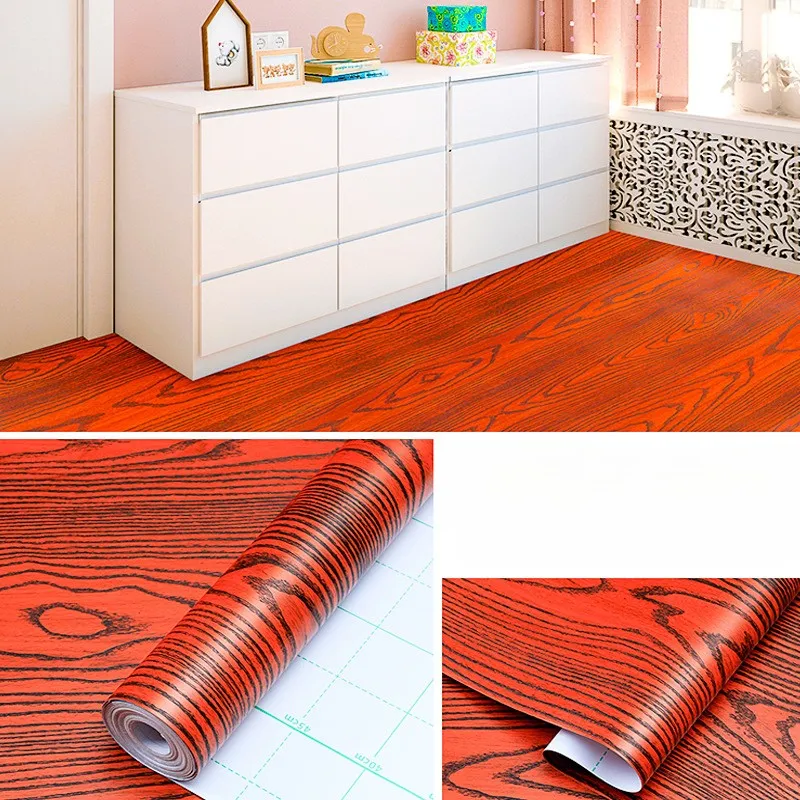
Soft PVC film is a flexible polyvinyl chloride sheet engineered for surface decoration, protection, sealing, and functional layering across furniture, building interiors, electronics, advertising, medical packaging, and household products. Because it can be formulated with different plasticizer systems, stabilizers, pigments, and coatings, “soft PVC film” covers a wide range of feels and performances—from crystal-clear protection film to premium soft-touch decorative finishes and self-adhesive wraps.
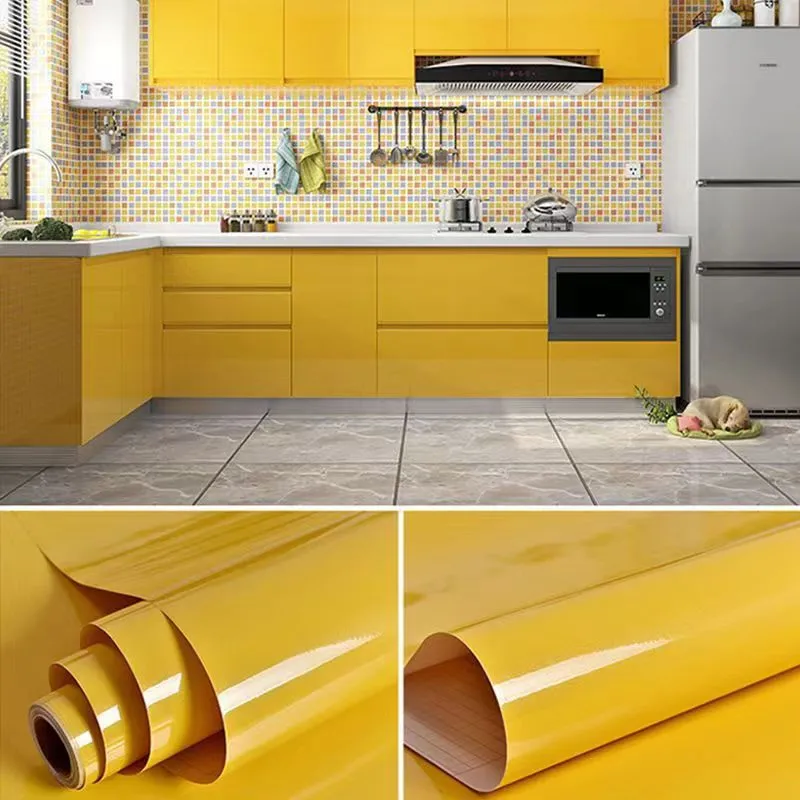
This guide explains where soft PVC film is used, why it’s chosen, which specifications matter most, and how to select the right type for your process and end-use environment—while keeping quality, safety, and total cost in balance.
PVC becomes “soft” when formulated for flexibility. Compared with rigid PVC sheets, soft PVC film is easier to laminate, wrap, emboss, and thermoform at lower stress, which makes it popular for decorative surfaces and protective layers. Depending on the recipe and production method, soft PVC film can be:
transparent,
matte,
glossy,
embossed,
pearlescent,
or printed (wood grain, marble, textile, metal, artistic textures).
Key takeaway: Soft PVC film is less about one “product” and more about a tunable material platform. The right choice depends on substrate, adhesion method, wear expectations, and compliance needs.
Soft PVC decorative film is widely applied to cabinet doors, wardrobes, tabletops, wall panels, partitions, and trim. Printed and embossed patterns help deliver premium looks at controlled cost while improving scratch resistance and cleaning convenience. Popular patterns include wood grain, stone/marble, solid colors, textile textures, and soft-touch finishes.
If you’re comparing decorative bases, start with a stable calendered structure for consistent thickness and surface quality:
Calendered Film.
For premium tactile upgrades, a texture series may be a better fit:
3D Silk Texture Film.
In architectural and interior decoration, soft PVC film is used as a surface layer for wall panels, skirting, ceiling trims, and door/window elements—especially where moisture resistance and easy maintenance matter. Skirting and profile films typically require stable color, abrasion resistance, and consistent adhesion to the base profile:
PVC skirting film.
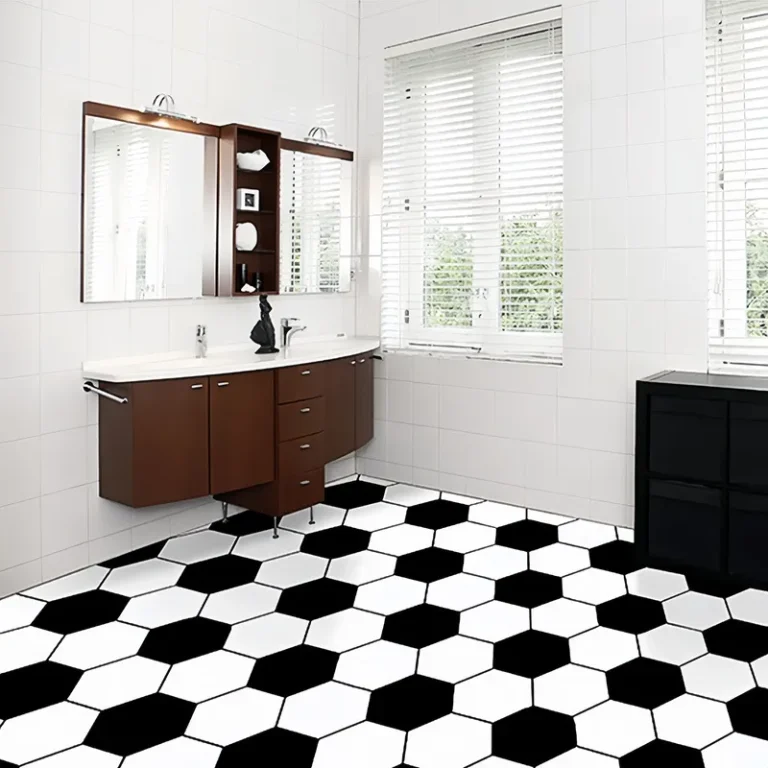
Floor-related PVC films may serve as decorative layers, wear layers, or protective coverings during construction and renovation. Key performance targets include abrasion resistance, dimensional stability, stain resistance, and compatibility with coatings. Explore flooring-oriented options here:
Floor Film.
Soft PVC film can be engineered for functional needs such as anti-static, insulation, and surface protection. For appliances and consumer electronics, consistent gloss level, scratch resistance, and print durability are often more important than maximum softness.
In signage and exhibition builds, soft PVC film is used for decorative wrapping, temporary surface changes, and protective overlays. Choose formulations that match printing technology (solvent/eco-solvent/UV) and consider flame performance where local codes require it.
Thickness influences feel, stiffness, wrapping behavior, and durability. Decorative lamination films are often thinner than protective coverings or floor-related layers. Always request thickness tolerance and confirm measurement method (micrometer points, average, and roll-to-roll uniformity).
Soft PVC film is typically delivered in rolls. The practical cost drivers are roll length, usable width, and slitting precision. If your laminator or wrapping line is sensitive to telescoping or uneven edges, specify:
edge quality,
winding hardness,
and roll straightness.
Surface finish affects both appearance and practicality. High gloss highlights premium aesthetics but may show scratches more easily; matte reduces glare and fingerprints; embossed textures can improve scratch hiding and add tactile value. For soft-touch, confirm resistance to:
skin oils,
cleaners,
and long-term tackiness.
For wood/marble/textile patterns, consistency matters across batches and between rolls. Ask for:
color matching (Lab/Delta E),
repeat length,
registration accuracy,
and lot traceability.
Selection must match your bonding method: hot-melt, PUR, water-based, solvent-based, or pressure-sensitive adhesive. If a film is supplied as self-adhesive, specify peel strength targets and the surface type it must stick to (painted panels, metal, glass, plastic, etc.). For lamination films, corona/chemical treatment on the backside can improve bonding reliability.
Depending on application, request relevant tests: tensile strength, elongation, tear resistance, abrasion, stain resistance, dimensional stability, and low-temperature flexibility. For interior decoration, also consider UV aging and heat resistance to reduce fading and warping in sun-exposed rooms.
If the film is used indoors or in human-contact environments, compliance is non-negotiable. Confirm whether the material is free of heavy metals and restricted phthalates, and whether it supports documentation aligned with
REACH,
RoHS,
and, where needed, FDA requirements. Ask for third-party reports when the project is sensitive (medical/cleanroom/children’s furniture).
✔ Step 1 — Define the substrate: MDF, particleboard, plywood, PVC profiles, metal, glass, acrylic, or composite panel.
✔ Step 2 — Pick the application method: flat lamination, membrane pressing, profile wrapping, thermoforming, or self-adhesive installation.
✔ Step 3 — Set appearance goals: gloss level, emboss depth, color system, pattern repeat, and tactile feel.
✔ Step 4 — Define performance targets: scratch/abrasion, stain resistance (kitchen oils, cosmetics), heat/UV aging, anti-static, anti-fog, waterproofing.
✔ Step 5 — Confirm compliance & documentation: required standards, test reports, traceability, and labeling.
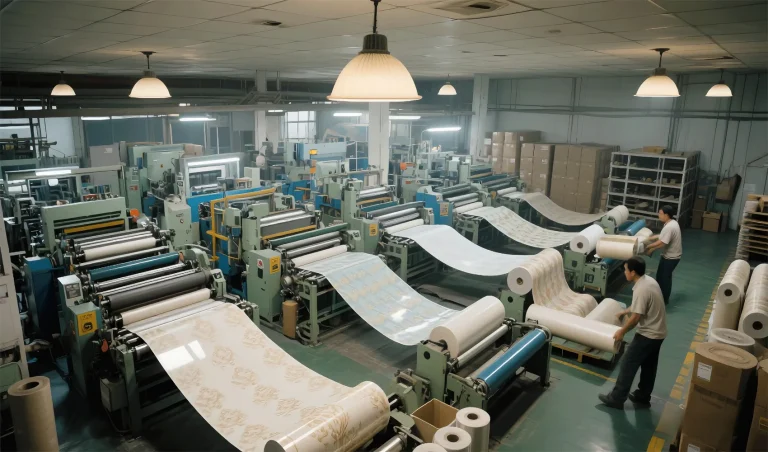
Consistent soft PVC film quality is usually the result of end-to-end process control: calendering for thickness stability, printing for accurate color/pattern, and precision slitting/packaging to reduce damage during shipping and handling. Strong producers typically support:
batch traceability,
multi-point thickness checks,
adhesion/peel tests,
and appearance inspection under controlled lighting.
Packaging note: For export or long-distance domestic transport, individually wrapped rolls (dust-proof PE film or kraft paper) plus clear spec labels reduce claims caused by contamination, edge damage, and warehouse mix-ups.
Operational benefit: When calendering, printing, and slitting are coordinated in one production plan, lead time is easier to stabilize and cost is easier to manage—especially for OEM/ODM customization.
Soft PVC film is a customization-friendly material. Typical OEM/ODM options include thickness, width, roll length, surface finish, emboss pattern, color/pattern printing, and functional coatings such as anti-static or anti-fog. To speed up sampling and quotation, prepare:
application scenario,
substrate type,
adhesive/lamination method,
target thickness & finish,
and estimated monthly volume.
● Storage: keep rolls upright or as recommended; avoid high heat, direct sunlight, and high humidity to prevent telescoping and print shift.
● Clean substrates: dust, oil, and moisture are common causes of edge lifting and bubbles.
● Process parameters: confirm lamination temperature/pressure/speed windows to avoid gloss change, shrinkage, or emboss distortion.
● Post-cure time: some adhesive systems need time to build final bond strength before cutting, packing, or heavy handling.
Comparing only “price per meter” often hides the real cost. To compare suppliers fairly, align the full specification: thickness tolerance, usable width, print standard, packaging, defect allowances, and compliance documentation. Also consider yield: a cheaper roll with higher waste (edge defects, gloss inconsistency, unstable adhesion) can cost more in production downtime and rework.
Quote checklist: include Incoterms, lead time, MOQ, sample policy, packaging method, and whether custom color/pattern setup fees apply.
Quality checklist: confirm QC points (raw material checks → in-process checks → final roll inspection) and whether third-party testing is available.
Calendered film is formed through a rolling process designed for stable thickness, smoothness, and consistency. It’s commonly used as a reliable base for decorative printing, embossing, and lamination applications.
Start with your application method (flat lamination, wrapping, thermoforming, self-adhesive) and durability needs (scratch/abrasion). Then verify thickness tolerance and run a pilot test on your actual production line.
It can be, provided the formulation meets required compliance (e.g., restricted substances). Request documentation such as REACH/RoHS alignment and third-party test reports for sensitive applications.
Common causes include dusty/oily substrates, mismatched adhesive systems, incorrect temperature/pressure, or insufficient curing time. Testing the film with your exact substrate and adhesive is the fastest way to prevent issues.
Yes. Many suppliers support OEM/ODM customization for thickness, width, roll size, printing, embossing, functional coatings, and export-ready packaging—especially when you can provide clear end-use requirements and expected volumes.