Address
304 North Cardinal St.
Dorchester Center, MA 02124
Work Hours
Monday to Friday: 7AM - 7PM
Weekend: 10AM - 5PM
Address
304 North Cardinal St.
Dorchester Center, MA 02124
Work Hours
Monday to Friday: 7AM - 7PM
Weekend: 10AM - 5PM



Rigid PVC film is a high-clarity, formable plastic sheet used to protect products, elevate shelf appeal, and withstand demanding industrial processes. Whether you’re sourcing film for thermoformed packaging, offset/UV printing, lamination, or protective overlays, choosing the right supplier directly impacts your yield, lead time, compliance, and final product consistency.
The best suppliers aren’t defined only by price. They stand out through repeatable film performance, clear documentation, and responsive technical support from sampling to mass production.
In packaging, printing, and industrial applications, rigid PVC film remains popular because it balances clarity, stiffness, formability, and cost efficiency. For brand owners, it protects products while presenting them cleanly on shelves; for converters, it runs predictably on thermoforming and printing lines.
Consistent forming windows, strong corners, and clean release help reduce scrap in blister packs, clamshells, and inserts.
Controlled surface energy improves ink anchorage; uniform gloss/haze supports premium appearance for POS and overlays.
Durability and chemical resistance make rigid film useful for protective layers, insulation-related uses, and process covers.
Before you request quotations, align internal requirements (end-use, tooling, printing method, compliance) and then evaluate suppliers using measurable criteria. This avoids a common issue: a film that looks fine in a sample roll but fails during mass production due to tolerance drift or unstable surface treatment.
“Top suppliers” can mean different things depending on your purchasing model. Some buyers prioritize ultra-tight tolerances for automated forming lines; others need fast design changes and frequent SKU updates for retail packaging. Below are the most common supplier categories and what they’re best at.
Integrated manufacturers control production from compounding and forming (such as calendering) through printing and slitting. This structure is ideal when you need stable quality, shorter lead times, and lower total cost due to reduced outsourcing. It also simplifies accountability: one technical team owns the entire result.
Converters may not manufacture film from scratch, but they offer value through local warehousing, rapid slitting/sheeting, and flexible MOQ. If your operation needs many widths, frequent reorder cycles, or quick emergency replenishment, a converter can reduce downtime—even if the per-unit cost is higher.
When your film must pass niche performance tests—anti-fog, anti-static, enhanced scratch resistance, or specific print adhesion—specialty coating capability can be the deciding factor. Ask for real test data and clarify shelf life/handling so performance doesn’t degrade after shipping and storage.
When comparing quotes, avoid focusing only on $/kg. Add the cost of scrap rate, line speed loss, claims/returns, and re-qualification time. The best supplier often wins on total cost of ownership, not just unit price.
Pulivk Film focuses on PVC film R&D and manufacturing, covering calendered film, decorative film, flooring film, soft-touch film, transparent film, and more. With modern equipment and multi-industry experience, Pulivk supports furniture, construction, electronics, advertising, medical, and home-use markets with reliable film material solutions.
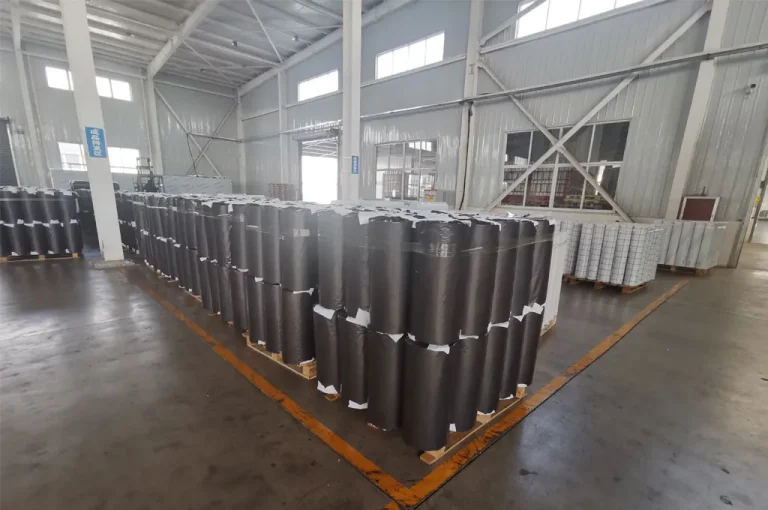
Pulivk operates a complete chain of calendering, printing, and slitting/packaging. This end-to-end capability helps maintain quality consistency while improving lead time and cost control—especially valuable for customers managing multiple SKUs and tight delivery windows.
If you’re building a sourcing shortlist, it helps to look at clear product categories and match them to your application tests. For example, if your line needs stable gauge for forming, you can start from a proven calendered base and then add surface treatments based on printing or anti-static requirements.
Many packaging and printing buyers need repeatable results across changing designs—seasonal promotions, new SKUs, or regional labeling updates. Pulivk supports OEM/ODM customization across thickness, width, roll size, colors, patterns, printing, surface treatments, and packaging. When handled correctly, customization should not compromise consistency; it should be supported by controlled recipes, sampling, and batch traceability.
For packaging, printing, and industrial uses, documentation is part of product quality. A capable supplier should be prepared to share relevant test reports and certification evidence that aligns with your destination market and customer audits.
In packaging, rigid PVC film must perform across the entire chain: forming, trimming, sealing/assembly (if relevant), and transport. Buyers typically prioritize low haze, good stiffness, and a stable forming window. If your packaging is retail-facing, consistency in clarity from batch to batch prevents display differences between production lots.
Printing performance depends heavily on surface energy and coating stability. A top supplier should help you match film to your ink system and curing method, and advise on storage conditions to prevent dyne decay. If you laminate after printing, confirm that the film’s surface treatment and any release properties won’t reduce bond strength.
Industrial users often demand tighter process control than appearance-focused markets. In these cases, ask suppliers to define how they manage raw material stability, melt/gel control, and roll-to-roll consistency—because small variations can become large defects during high-speed converting.
Rigid PVC film is frequently purchased on recurring schedules. A supplier’s production planning and inventory management can be as important as its product specs. Look for a clear approach to trial orders, scale-up, and on-time delivery—plus export-ready packaging to reduce moisture or transit damage risks.
Many sourcing problems happen not because the supplier is “bad,” but because the film was never fully defined. Use measurable targets and validate under real production conditions.
A single lab sample may not reflect mass-production variation. Request multiple lots or a pilot run to confirm stability.
Print adhesion can degrade over time. Confirm packaging, shelf life, and recommended storage to maintain dyne level.
Roll width, core size, winding direction, and edge quality affect productivity. Specify them in your PO and artwork files.
It’s widely used for thermoformed packaging, printed overlays, protective covers, decorative surfaces, and industrial protection layers where clarity and stiffness are required.
Gloss maximizes clarity and shelf impact, matte reduces glare and fingerprints, and textured finishes add premium feel while helping hide minor scuffs—choose based on display environment and handling frequency.
Share application (packaging/printing/industrial), thickness and tolerance, width/roll size, finish, surface treatment needs (anti-static/anti-fog/printable), compliance requirements, and target quantity.
Yes—many leading manufacturers can customize thickness, width, color/pattern, printing, surface treatments, and packaging, then validate results through sampling and pilot runs.
Confirm batch traceability, defined QC metrics (thickness/optics/adhesion), controlled formulations, and clear incoming inspection standards on your side—then lock key parameters in a specification sheet.