Address
304 North Cardinal St.
Dorchester Center, MA 02124
Work Hours
Monday to Friday: 7AM - 7PM
Weekend: 10AM - 5PM
Address
304 North Cardinal St.
Dorchester Center, MA 02124
Work Hours
Monday to Friday: 7AM - 7PM
Weekend: 10AM - 5PM


Achieving a stable, high-output PVC film extrusion process is not just about running the extruder hotter or faster—it’s about aligning formulation, melt handling, die design, cooling, and winding into one controlled system. This guide breaks down the practical equipment setup, key parameters, and real-world troubleshooting methods used to produce high-quality PVC films for decorative, industrial, and functional applications.
Quality targets depend on the end use—furniture wrapping, wall panels, flooring, appliance protection, medical packaging, or self-adhesive decoration—but most plants judge extrusion success by the same core indicators:
A typical PVC film extrusion line follows this sequence: compounding or feeding → plasticizing/melting → filtration → metering → die forming → cooling & sizing → surface treatment (optional) → slitting → winding & packaging.
Key point: PVC is heat-sensitive. “More heat” can quickly become discoloration, odor, gel formation, and long-term die buildup. High-quality film comes from controlled shear, stable residence time, clean melt filtration, and predictable cooling.
If you also produce calendered products, you can compare outputs and application styles via Calendered Film.
PVC film can be produced from dry blend (powder + additives) or pelletized compound. Your feeding system should support consistent bulk density and avoid bridging—especially with powders.
For PVC film, you’ll typically see single-screw extruders with PVC-optimized screws, or conical/parallel twin-screw extruders where mixing and thermal control are priorities. The screw should balance plasticization and low thermal stress.
A continuous or manual screen changer removes contaminants, unmelted particles, and gels. For thin films, filtration stability is as important as cleanliness: pressure fluctuation often shows up as thickness banding.
Use a filtration strategy that matches your formulation and output. Overly fine screens raise back pressure and residence time, increasing degradation risk; overly coarse screens allow defects to pass.
A gear melt pump stabilizes flow to the die and reduces sensitivity to screw speed variations. For high-end decorative films (gloss, matte, embossed, and transparent), a melt pump often pays back quickly through better gauge control and fewer rolls downgraded.
Film quality is heavily influenced by die design, lip condition, and thermal uniformity. Common causes of streaks and die lines are lip damage, dead zones, and uneven die temperature.
Cooling determines surface finish and internal stress. A stable chill roll temperature profile helps prevent waviness, curl, and gloss inconsistency. Keep roll surfaces clean—minor residue can imprint as repeating defects.
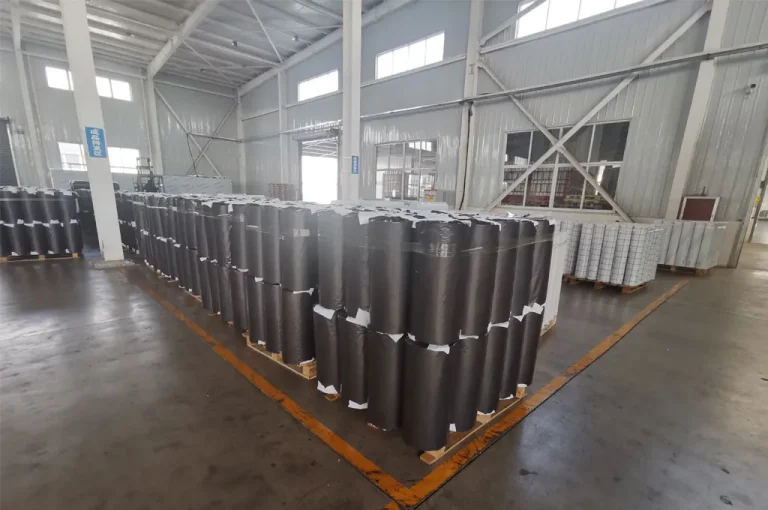
Even perfect film can be downgraded by poor winding: telescoping, blocking, edge damage, or trapped air. Use tension control, lay-on rollers, and appropriate cores. For export-ready rolls, individual wrapping (dust-proof PE film or kraft paper) and clear labels improve shipment safety and traceability.
PVC processing windows are narrower than many polymers. Instead of chasing a single “best” setpoint, aim for stable melt temperature with minimal fluctuation. Large swings often signal feed inconsistency, poor heating control, or shear instability.
When changing thickness or speed, adjust gradually. Sudden increases in output can spike shear heating, raising melt temperature even if barrel heaters stay constant.
Output and line speed must match your cooling capacity. If the film is drawn too aggressively before it is properly cooled, you may see neck-in, edge thinning, or orientation lines. If line speed is too low for a given melt temperature, residence time increases and degradation risk rises.
Cross-web thickness is typically tuned with die bolts/thermal zones, while machine-direction variation is influenced by output stability and winding speed control. Online thickness gauges (beta/IR) with feedback control can reduce waste dramatically, especially for thin transparent or high-gloss decorative films.
For glossy films, surface replication of the chill roll is critical—keep roll finish and temperature stable. For matte or textured films, control release and avoid micro-tearing that can look like haze or roughness under angled light.
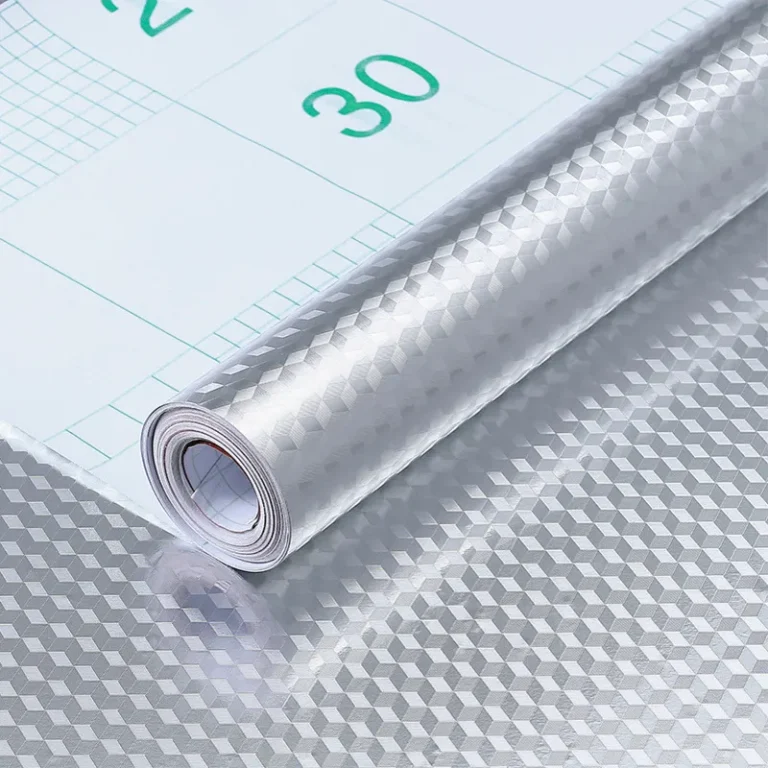
If your product portfolio includes textured decorative styles such as 3D Silk Texture Film or wood aesthetics like Wood Grain Film, note that texture fidelity depends on both melt stability and cooling pressure/temperature consistency.
PVC film performance is strongly tied to the compound design. In addition to resin grade, the balance of stabilizers, plasticizers, lubricants, fillers, pigments, and processing aids determines:
melt strength, thermal stability, surface feel, clarity, and long-term aging.
For films intended for indoor decoration and human contact, many buyers require compliance with quality and safety systems (for example ISO management systems and chemical compliance such as REACH/RoHS). Matching the formulation to these requirements early prevents later requalification and production interruptions.
Likely causes: die temperature imbalance, unstable feed rate, screen clogging pressure swings, no melt pump, poor tension control, chill roll temperature gradients.
Fix: stabilize filtration (change screens/continuous changer), confirm actual melt temp, calibrate die zones, introduce melt pump if needed, tune winder tension, check chill roll water flow distribution.
Likely causes: contaminated raw material, poor fusion, degraded material in dead zones, burnt deposits in die, worn screw/barrel, overly long residence time.
Fix: improve raw material screening, adjust screw speed/temperature for full fusion, shorten residence time, clean adapter/die, implement preventative purge/cleaning schedule, monitor torque trends.
Likely causes: die lip damage, buildup (plate-out), unstable pressure, contamination passing through screens, uneven die temperature profile.
Fix: clean and polish lips (controlled method), optimize lubrication package to reduce plate-out, upgrade filtration, stabilize melt flow with pump, verify die zone heaters/sensors.
Likely causes: overheating or under-fusion, chill roll contamination, improper cooling rate, formulation not optimized for transparency, micro-scratches from handling.
Fix: target stable melt temperature, clean roll surfaces, tune chill roll temperature and nip pressure, review compound clarity package, reduce dust during slitting/packing.
Likely causes: unbalanced cooling (top vs bottom), excessive draw/orientation, residual stress, uneven thickness, incorrect winding tension profile.
Fix: balance cooling and contact time, reduce draw ratio, improve thickness profile, introduce conditioning time before slitting (when needed), tune taper tension and roll hardness.
One reason PVC film production is profitable is its wide application range—furniture, construction decoration, electronics, advertising display, medical/cleanroom packaging, and household goods. However, each market prioritizes different properties, so extrusion settings should be “product-driven,” not one-size-fits-all.
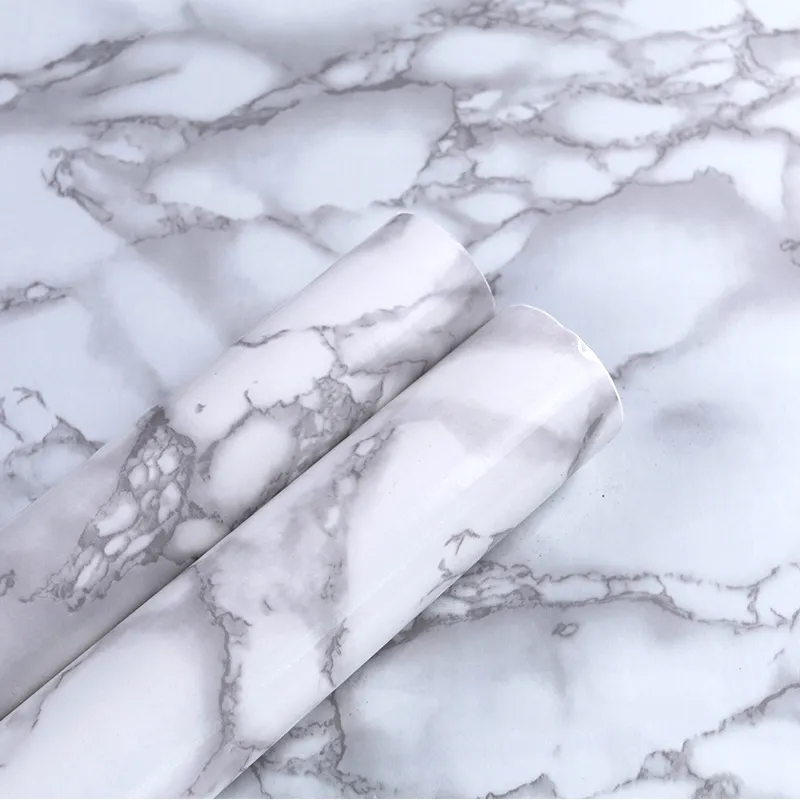
These films often require stable gloss/matte, printability, and scratch resistance. Surface consistency is critical under showroom lighting. For wall decoration options, you can see examples like
Solid Color Wallpaper and stone-look styles such as
Marble Film.
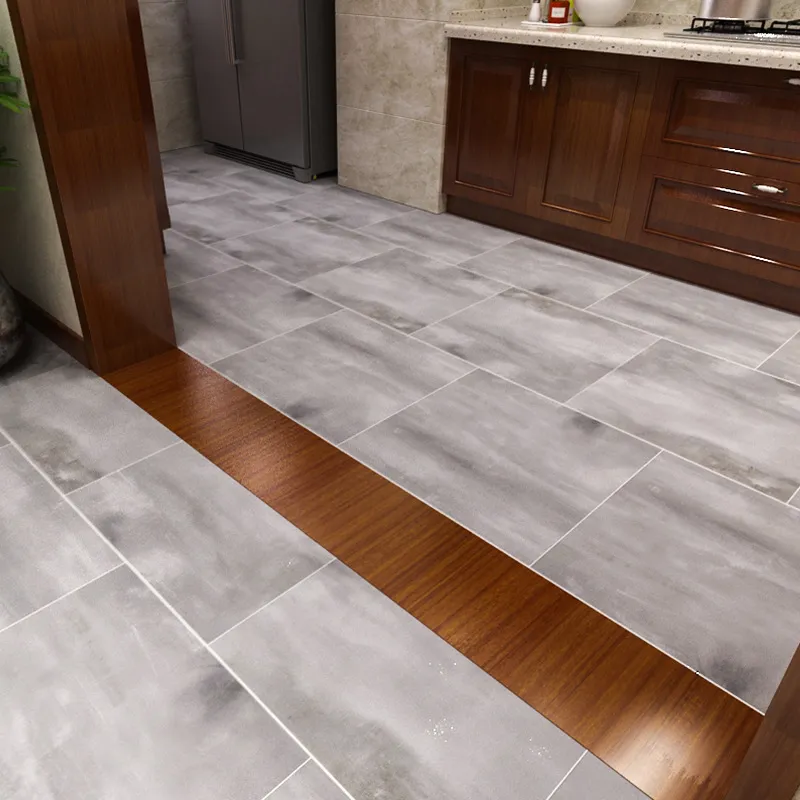
Flooring films emphasize abrasion resistance, dimensional stability, and long-term aging. Gauge control and stress management during cooling/winding are especially important to reduce later curling or seam visibility. For reference product types, review Floor Film.
Functional films require stable additive distribution. Anti-static performance, for example, can drift if the formulation plates out or migrates. Self-adhesive structures must maintain clean surfaces and consistent release/tack behavior—winding pressure and storage conditions matter as much as extrusion.
A strong QC routine catches drift before it becomes a full-shift loss. Many plants combine online monitoring with quick offline verification.
Many chronic film defects are maintenance defects in disguise. A predictable extrusion process depends on keeping melt paths clean and thermal control accurate.
Tip for stable output: keep a “golden run” record—same resin lot (when possible), same screen pack strategy, same die profile, same cooling settings—and compare every deviation against this baseline before making multiple changes at once.
Usually from thermal degradation caused by excessive melt temperature, long residence time, or unstable shear heating. Stabilizer balance and clean melt paths also matter.