Address
304 North Cardinal St.
Dorchester Center, MA 02124
Work Hours
Monday to Friday: 7AM - 7PM
Weekend: 10AM - 5PM
Address
304 North Cardinal St.
Dorchester Center, MA 02124
Work Hours
Monday to Friday: 7AM - 7PM
Weekend: 10AM - 5PM


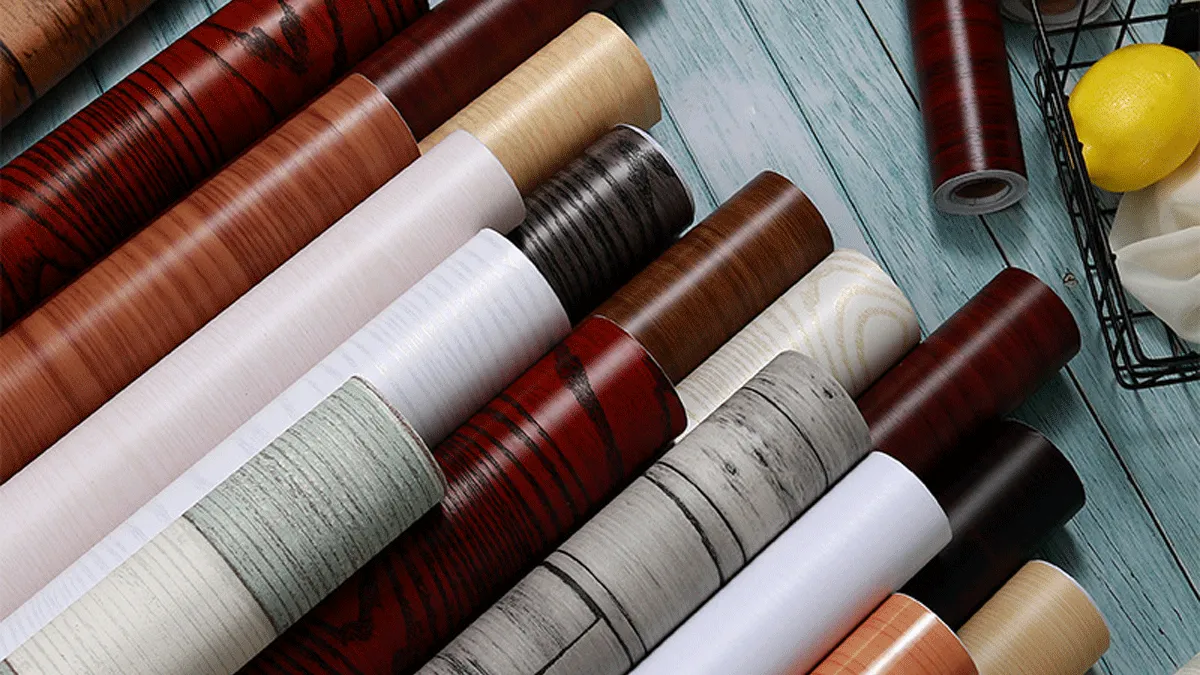
PVC film is widely used to protect and decorate surfaces—from cabinetry and wall panels to flooring and industrial packaging. But when PVC film is exposed to sunlight (or intense indoor UV sources), many users ask the same question: Can PVC film be UV-resistant? The practical answer is yes—PVC film can be formulated and finished to withstand UV—but its real-world performance depends on the resin system, additives, coatings, thickness, color/pigments, and the environment where it’s installed.
This guide explains how UV affects PVC, what “UV-resistant” truly means in specifications, where PVC performs best outdoors or near windows, and how to significantly improve UV durability through correct material selection, lamination, coatings, and installation practices.
Key takeaway:
UV resistance is not a single switch. It is a performance package combining stabilizers + pigments + surface layer + correct application design.
UV radiation (mainly UVA and UVB) triggers photo-oxidation in many polymers. For PVC film, prolonged UV exposure can lead to changes in both appearance and mechanical properties. This is especially relevant for decorative and architectural uses—furniture near windows, wall coverings in sunlit rooms, storefront displays, and any semi-outdoor installation.
Why UV resistance is business-critical:
Many PVC film applications are chosen for aesthetics. If the film fades unevenly or yellows near window edges, the entire surface can look inconsistent—leading to rework costs and customer complaints.
Yes. PVC film can be made UV-resistant through stabilizers, absorbers, pigments, and protective surface layers. However, “UV-resistant” should always be tied to a test method and exposure target. Without that, the claim can be vague.
UV-enhanced PVC films are designed to keep decorative appearance and protective performance stable when exposed to sunlight, heat, and oxygen. This matters for high-visibility surfaces such as door wraps, wall coverings, skirting boards, and flooring near balconies or large glass facades.
Typical sun-exposed indoor hotspots:
window-adjacent cabinets, retail displays, lobby wall panels, balcony-side flooring edges, and decorative skirting under strong daylight reflection.
Even with stabilization, PVC film is not automatically a “forever outdoor” material. The limitation is not only UV; it’s the combined stress of UV + heat cycling + moisture + pollutants + mechanical wear.
Practical rule:
If your application faces direct sun + high heat, specify UV performance as a system (film + ink + coating + adhesive + substrate), not as a single film roll.
UV performance can be dramatically improved through formulation and surface engineering. Below are the most effective methods used in decorative and industrial PVC film manufacturing.
Stabilizer packages typically include UV absorbers (to convert UV energy into heat) and HALS-type stabilizers (to interrupt degradation cycles). The right package depends on film thickness, transparency, color system, and expected exposure time.
A UV-resistant clear coat can shield the decorative layer, improve stain resistance, and maintain gloss/matte appearance longer. For high-touch surfaces, coating selection should also consider scratch resistance and cleanability.
Many “fading” complaints are ink-related rather than base-film-related. Lightfast pigments and UV-stable ink systems improve color retention. This is critical for wood grain, marble, and texture-rich designs that show fading unevenly.
Multi-layer constructions can place UV-stabilized or tougher layers on the outside, while keeping decorative layers protected underneath. In many real applications, this structure upgrade brings more benefit than simply increasing thickness.
A film designed for flooring wear is not the same as one designed for a vertical decorative wall. Selecting the correct product category reduces UV-related complaints because the film is engineered for its stress profile (traffic, heat, cleaning chemicals, etc.).
Tip for buyers:
Ask for accelerated weathering results, and specify your scenario: “Indoor, near window, south-facing, high daylight” vs. “Semi-outdoor signage under canopy.” This helps the supplier choose the correct stabilizer and coating system.
UV durability is influenced by how the film is produced and what it’s built to do. For example, well-controlled calendering plus stable additives can produce consistent thickness and properties that support better long-term performance.
Reminder:
A highly textured surface (embossed, silk texture, matte) can visually hide minor gloss changes, while a high-gloss surface may show UV-driven gloss loss earlier—even if the underlying chemistry is similar.
Material formulation is only part of UV durability. The same PVC film can last much longer when design and installation reduce UV intensity and heat buildup.
Field note:
If a film fails “only on one side,” it often points to directional sun exposure (south/west facing windows) rather than overall material inconsistency.
If UV durability is important, it’s smart to validate performance with a small pilot—especially for large-area decorative projects. Evaluation should be based on both lab tests and real exposure conditions.
UV-enhanced PVC films are especially valuable wherever aesthetics and long-term consistency matter. The industries below often demand better UV stability due to bright environments, showroom lighting, and customer-facing surfaces.
Cabinet doors, wardrobe panels, wall cladding, and decorative wraps near windows benefit from improved color stability—particularly for glossy or highly patterned designs.
Skirting and edge trims can see strong sun angles and reflected light from floors.
Explore: PVC Skirting Film
Bright lighting can accelerate fading. UV-resistant films help preserve brand colors and premium finishes in displays and panels.
To get reliable UV performance, it helps to communicate your requirements in measurable terms. A capable supplier can adjust formulation, printing, and coating while keeping thickness, gloss, embossing, and roll consistency under control.
Procurement tip:
If you have multiple destinations (different climates), specify the most severe exposure scenario so the supplier can design the stabilizer and coating package conservatively.
Basic PVC has limited UV durability. Long-term UV resistance typically requires stabilizers and/or protective coatings, especially for sunlit locations.
Ask for accelerated weathering results and set acceptance criteria (color change, gloss retention, cracking). “UV-resistant” should be tied to a test method and exposure target.
Not always. Thickness can help, but stabilizer package, pigments, inks, and topcoat often have a bigger impact on UV performance.
Daylight through glass still contains UVA, and window areas often experience higher heat and stronger directional exposure, which accelerates aging.
Yes. UV performance can be engineered alongside design and functionality—such as color matching, embossing, and adhesive systems—by selecting compatible inks, coatings, and stabilizers during OEM/ODM development.