Address
304 North Cardinal St.
Dorchester Center, MA 02124
Work Hours
Monday to Friday: 7AM - 7PM
Weekend: 10AM - 5PM
Address
304 North Cardinal St.
Dorchester Center, MA 02124
Work Hours
Monday to Friday: 7AM - 7PM
Weekend: 10AM - 5PM



PVC film is one of the most widely traded flexible materials used in furniture wrapping, interior decoration, building materials, electronics protection, advertising, medical packaging, and home applications. But “can it be exported?” is not just a yes-or-no question. Export suitability depends on regulatory compliance, product classification, packaging strength, and shipping strategy—especially when customers expect consistent roll quality after weeks at sea.
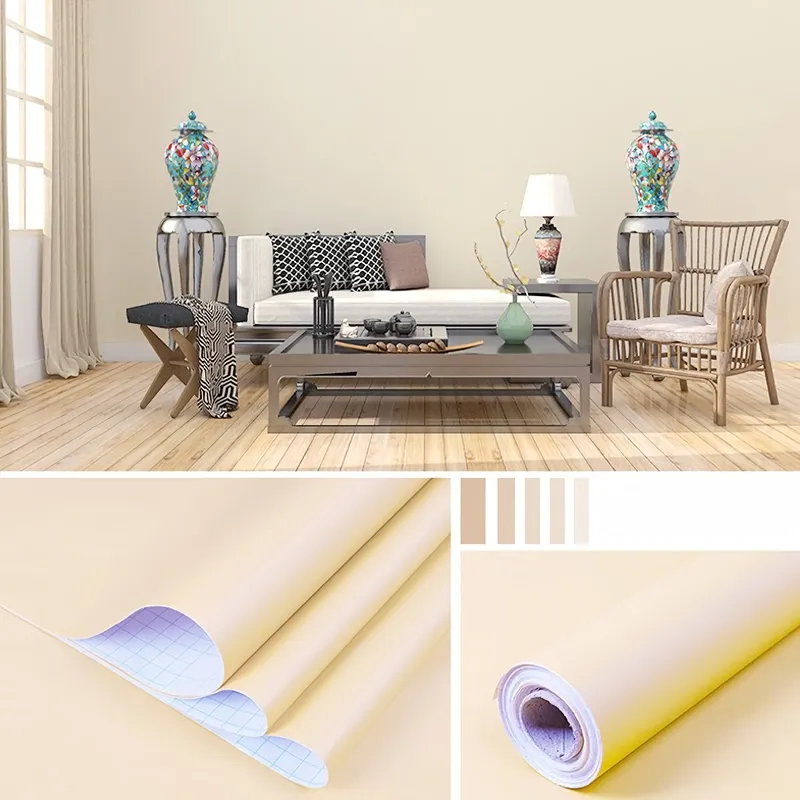
This guide explains the key export requirements for PVC film, the most common certifications buyers request, and practical shipping tips to reduce claims such as edge damage, telescoping, blocking, odor issues, and surface scratches.
Yes—PVC film is export-friendly when it is manufactured with stable formulation and controlled processing (calendering/printing/laminating/slitting), then packed to withstand long-distance logistics. The critical point is that different end uses trigger different import rules. For example:
✔ Decorative & furniture films usually focus on VOC/odor control, heavy metal limits, and surface durability.
✔ Electronics protection films often require anti-static performance and clean packaging.
✔ Food-contact or medical-related films may require FDA/food-grade declarations and tighter migration testing.
Export success comes from aligning the film type (transparent, matte, embossed, pearlescent, self-adhesive, anti-static, etc.) with the destination market’s compliance expectations and the buyer’s converting process (lamination, vacuum pressing, membrane pressing, wrapping, flat lamination).
Buyers often select PVC film by process type (calendered vs. coated), surface design (wood grain, marble, solid color, metallic), and functional requirement (anti-scratch, anti-static, soft-touch, self-adhesive). Your export documents and packaging approach should match the product characteristics.
For many destinations, the baseline expectation is that PVC film is free of heavy metals and restricted phthalates. Importers often request declarations and third-party test reports aligned with:
🔎 Typical compliance requests:
If you sell into interior decoration markets, the “real-world” buyer concern is not only chemical content but smell after installation. Low-odor inks and stable plasticizer selection reduce complaints and improve acceptance in home and commercial indoor environments.
Many buyers treat system certification as a supplier screening tool. The most frequently requested are:
ISO 9001 (quality management) and ISO 14001 (environmental management).
These do not replace product test reports, but they improve confidence in consistency and traceability.
Export disputes often come from “spec mismatch,” not from obvious defects. A complete specification should clearly define:
⭐ Export tip:
Put the “non-negotiables” in writing (tolerance, core, packing method, label content). For PVC film, packing method is part of product quality because it directly affects roll edges and surface condition on arrival.
The exact paperwork varies by country, Incoterms, and product category, but most PVC film shipments use a standard export set:
If your customer will re-sell or use the film in regulated environments, they may also ask for third-party lab reports by lot number to support local auditing.
There is no single “global PVC film certificate” that fits all scenarios. Instead, buyers request a combination of system and product compliance. The most common set includes:
⚠ Note:
Many markets accept a supplier’s declaration only for low-risk use, but projects involving retail brands, hospitals, or chain stores often require third-party reports. Plan lead time for testing before mass production.
PVC film typically ships in rolls, which means damage is often “invisible” until the customer unwinds. The most frequent problems include:
For most destinations and long transit times, a strong packing standard should be treated as part of the product specification. Common best practices include:
📦 Individual roll protection:
wrap each roll with dust-proof PE film or kraft paper and attach a clear specification label.
🧱 Edge & core control:
use strong cores, protect roll edges, and ensure consistent winding hardness to reduce telescoping.
🧰 Outer packing:
carton or pallet packing based on roll size; strap securely; add corner protection if palletized.
If the film has delicate embossing (3D textures) or glossy surfaces, consider upgrading surface protection (interleaf, protective film, or low-friction wrap) to prevent scuffing during vibration and stacking.
Sea freight is the default for PVC film due to cost efficiency, especially for full container loads and heavy rolls. Air freight may be chosen for urgent sample replenishment or small high-value shipments, but the cost per kilogram is much higher.
✅ Loading checklist:
PVC film can soften under heat, increasing the risk of blocking (layers sticking) and print transfer in tightly wound rolls. In hot seasons or hot routes:
Professional export shipments usually require clear labels for warehouse scanning, customs, and customer receiving. A practical label set includes:
🧾 Best practice:
align label fields with your COA/TDS fields so the customer can quickly match rolls to test reports. This reduces receiving delays and improves repeat orders.
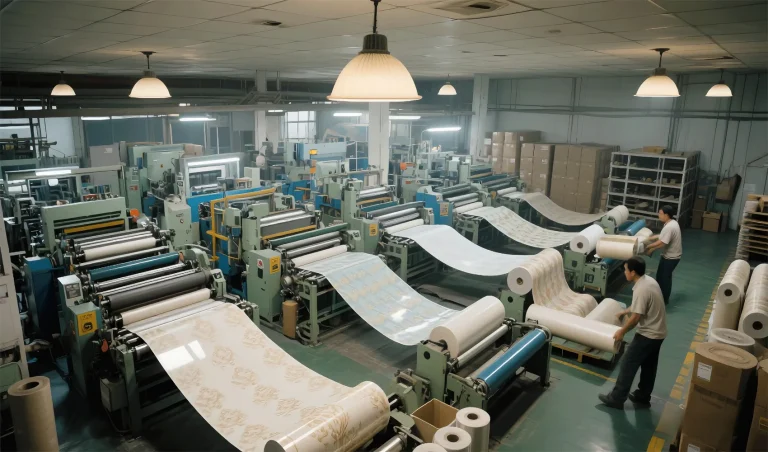
A capable PVC film supplier should be able to control the full process—from calendering and printing to slitting and packaging—because export quality depends on consistent process parameters and disciplined QC.
For many importers, speed matters as much as price. A supplier with integrated lines (calendering, printing, and slitting/packing) can shorten lead time and reduce handling damage between processes.
Priorities include surface appearance, scratch resistance, adhesion behavior during lamination, and low odor. Shipping focus: prevent scuffing and edge damage that can ruin high-gloss films.
Priorities include color stability, water resistance, and easy installation behavior. Shipping focus: avoid telescoping and compression marks that make installation uneven.
Priorities include cleanliness, anti-static performance, and consistent thickness. Shipping focus: sealed packaging and clear batch labeling to support incoming inspection.
The most common are ISO 9001, ISO 14001, plus product compliance like REACH and RoHS. For specific uses, buyers may request FDA and third-party test reports.
Use individual roll wrap, strong cores, edge protection, stable palletization, and proper bracing inside the container. Also avoid over-stacking and keep rolls away from container walls.
Heat and pressure during transit can cause layers to stick or transfer ink, especially in hot-season containers. Proper formulation, controlled winding hardness, and improved packing reduce the risk.
Include film type, thickness/width/length, pattern or color code, batch/lot number, winding direction, core size, and production date—so the buyer can match rolls to COA/TDS quickly.
Yes. Export buyers commonly request OEM/ODM customization for thickness, width, roll size, surface finish (gloss/matte/emboss), anti-static/functional coatings, printing, and packaging.