Address
304 North Cardinal St.
Dorchester Center, MA 02124
Work Hours
Monday to Friday: 7AM - 7PM
Weekend: 10AM - 5PM
Address
304 North Cardinal St.
Dorchester Center, MA 02124
Work Hours
Monday to Friday: 7AM - 7PM
Weekend: 10AM - 5PM


Custom PVC film for vacuum forming is a practical way to achieve clean contours, durable surfaces, and consistent appearance across clear and color applications. From protective covers and display parts to interior decorative components, vacuum-formable PVC sheets help manufacturers balance visual quality, process stability, and cost efficiency—especially when thickness, finish, and performance are tailored to the forming tool and the end-use environment.

Key idea:
In vacuum forming, the film/sheet must heat evenly, stretch predictably, and retain clarity or color without stress whitening—so the “right” PVC is a combination of formulation, calendering quality, surface finish, and QC control.
PVC (polyvinyl chloride) can be engineered to become heat-formable within a stable processing window, allowing it to drape over molds and capture detail under vacuum. Compared with many alternatives, custom PVC film offers a strong balance of:
Clear vacuum forming PVC is commonly selected for protective covers, product packaging components, display guards, and any part where visibility matters. The most important targets are clarity, low haze, and uniform thickness so the part does not show distortion after forming.
✔ For clear applications, prioritize:
Colored PVC for vacuum forming is popular in furniture panels, interior décor parts, kiosk housings, point-of-sale elements, and custom trims. Here the focus shifts to color consistency, surface defect control, and forming stability (so color stays even when the sheet stretches).
For decorative lines, many buyers source base material from a calendered film process because it supports stable thickness control and a wide range of finishes suitable for post-forming aesthetics.
Vacuum-formable PVC sheets and films can be tuned for different markets. Typical applications include:
Cabinet skins, door panels, decorative trims, and formed surface covers often require scratch resistance and consistent appearance under indoor lighting.
If you need pattern effects, consider pairing vacuum forming with decorative options such as wood grain film to achieve a premium look while maintaining production efficiency.
Formed panels, protective covers, and decorative elements benefit from PVC’s easy maintenance and the ability to specify matte/gloss to match design intent.
Complementary interior profiles can also be finished with materials like PVC skirting film for coordinated aesthetics.
Anti-static options and protective surface requirements are common. Custom formulations can support easier forming and better dimensional stability for housings and guards.
A “standard” PVC film may work for simple parts, but complex molds and visible products usually benefit from customization. The most requested parameters include:
Note for designers & engineers:
If your product relies on a luxury tactile feel or high-end lighting effects, textured finishes such as 3D silk texture film can enhance perceived quality—just ensure the texture depth is compatible with your mold detail and cleaning requirements.
Uniform thickness and stable formulation help the sheet heat evenly, reducing thin spots and minimizing defects like webbing or orange-peel texture. For clear parts, controlled heating is especially critical to avoid optical distortion.
Deep draws require predictable stretching behavior. Customizing plasticizer balance and base resin selection can improve elongation while maintaining surface integrity. For colored films, better stretch control also supports more uniform color appearance after forming.
Vacuum forming is only half the story—parts must survive real-world use. Depending on the market, you may need better scratch resistance, stain resistance, or anti-static behavior. Specifying the right surface finish and optional treatments improves long-term performance.
Consistent vacuum forming results depend heavily on film consistency. A supplier with integrated calendering, printing, and slitting/packaging can control key variables from raw material to finished rolls—helping reduce lot-to-lot variation and shortening lead times for OEM projects.
Many vacuum formed PVC parts end up in indoor spaces or consumer-facing products. For that reason, buyers often request compliance alignment with quality and safety systems such as ISO 9001, ISO 14001, and chemical restrictions like REACH and RoHS. When the application involves food contact or sensitive environments, FDA-aligned materials and third-party test reports may also be relevant.
⚑ QC checkpoints commonly used for vacuum forming PVC:
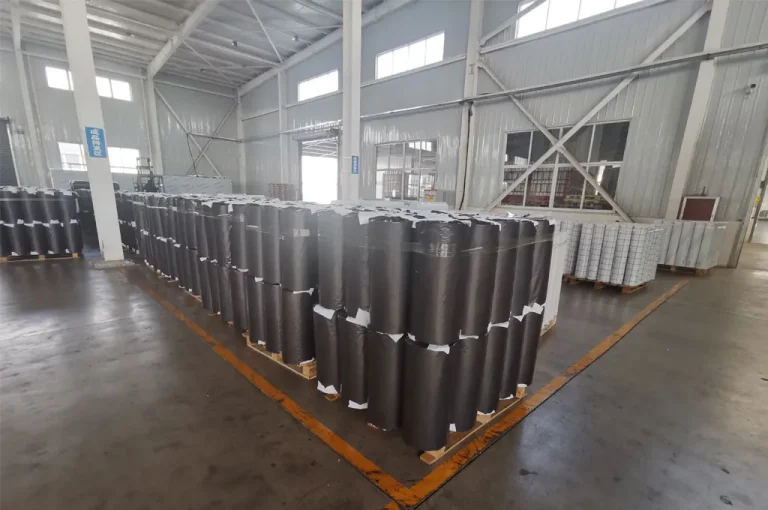
Vacuum forming lines are sensitive to dust, edge damage, and roll telescoping. For reliable production, PVC film is often individually wrapped with dust-resistant protection (such as PE film or kraft paper) and labeled by specification to maintain traceability. Proper moisture and impact protection is especially important for international shipments.
When requesting a quotation or samples, sharing complete forming details speeds up selection and improves first-pass success. Provide:
Pro tip:
If you are scaling from prototyping to mass production, request that samples and bulk material match the same process route (calendering/printing/slitting) and QC plan. That reduces “sample-to-bulk” variation in forming behavior.
It depends on draw depth, part stiffness needs, and cycle time. Share your mold depth and target rigidity so the thickness can be matched to the draw ratio and surface requirement.
Yes, but clear and colored formulations may require different adjustments to maintain optical targets and avoid stress marks. A supplier can tune the recipe so both variants run in a similar processing window.
Yes—common options include gloss/matte/embossed finishes, custom colors/patterns, anti-static or anti-fog treatments, and export-ready wrapping with labeled specifications.
Provide film type, thickness, width/roll size, finish, color/pattern, application, and expected quantity. Include basic forming conditions if possible for more accurate recommendations.
Depending on the project, materials can align with ISO management systems and chemical compliance requirements such as REACH and RoHS, with test reports available when needed.