Address
304 North Cardinal St.
Dorchester Center, MA 02124
Work Hours
Monday to Friday: 7AM - 7PM
Weekend: 10AM - 5PM
Address
304 North Cardinal St.
Dorchester Center, MA 02124
Work Hours
Monday to Friday: 7AM - 7PM
Weekend: 10AM - 5PM


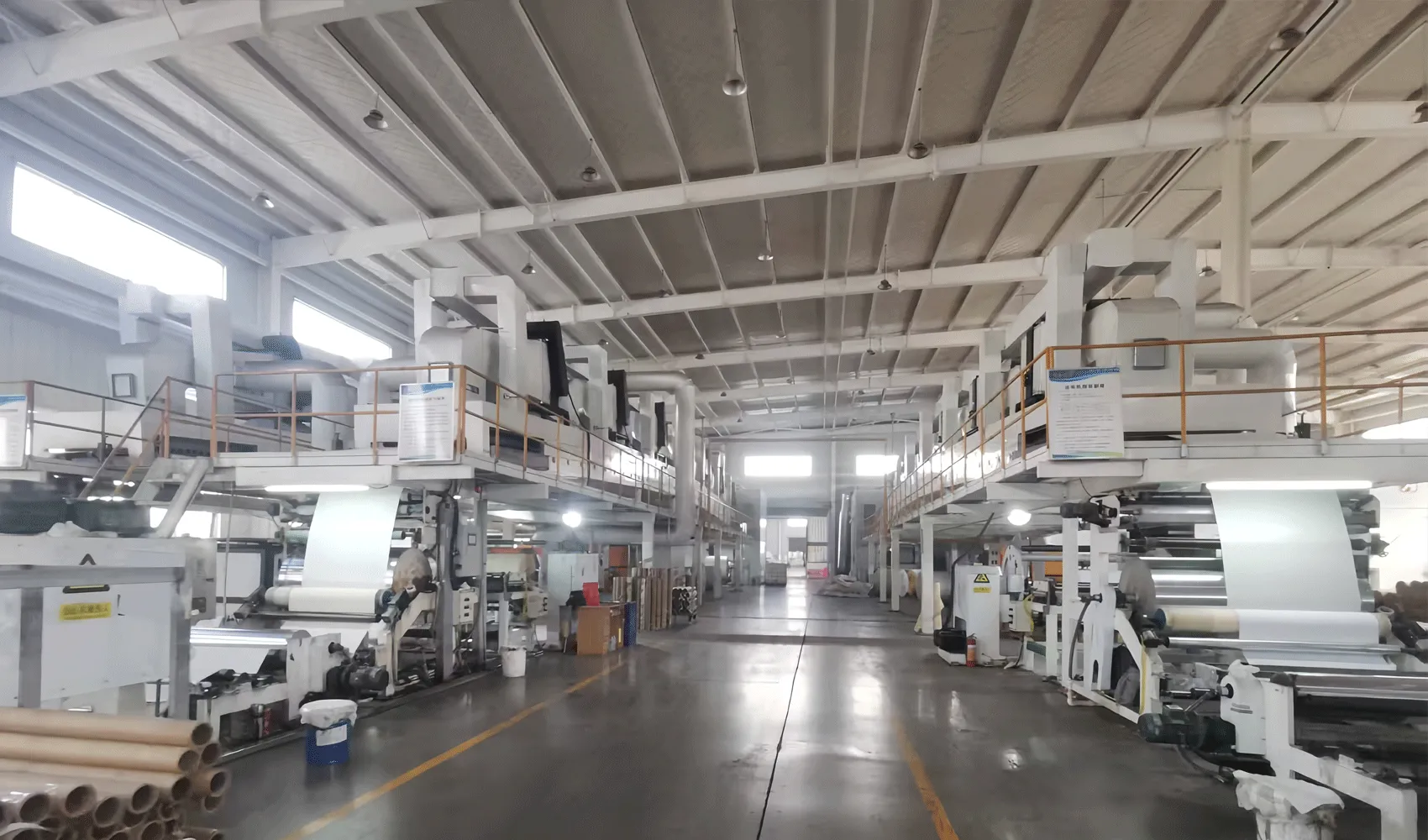
The PVC film calendering machine is a core technology for producing decorative, protective, and packaging films with precise thickness, surface finish, and mechanical properties. This article explains how calendering works, the machine’s main components, process parameters, common applications, troubleshooting tips, and what to consider when selecting a production line.
Calendering transforms a polymer melt or plastisol into a continuous film by passing the material through a series of heated and chilled rollers. The key principle is mechanical compression and controlled cooling: the polymer is metered (often via an extruder or feed system), spread into a uniform sheet at the roll nips, shaped by roll gaps and surface textures, then cooled and wound. Precise control of roll temperature, pressure, and line speed produces consistent gauge, smoothness, and desired surface effects.
1. Preparation: PVC compounding or plastisol premix is prepared with stabilizers, plasticizers, fillers and additives.
2. Feeding/Extrusion: Material is fed to the calender via an extruder or die.
3. Calendering: The material passes through a roll stack where heated rolls and chill rolls control flow, thickness and texture.
4. Surface Treatments & Printing (optional): Corona or flame treatment, printing, or embossing can be integrated inline.
5. Cooling & Winding: Final cooling sets film properties before winding into rolls.
Extruder / Feed System: Ensures uniform feed and melt pressure. Critical for consistent output.
Roll Stack (Calender Rolls): Usually 2–6 rolls made of chrome or hardened steel; surface finish determines gloss or matte effects.
Temperature Control System: Independent heating/cooling circuits for each roll to maintain thermal stability.
Nip Gap & Thickness Control: Precision screw or hydraulic gap adjustment for accurate film gauge.
Cooling Section & Chill Rolls: Rapid cooling to lock in film dimensions and prevent deformation.
Surface Treatment Unit: Corona/flame treatment to improve printability and adhesion when required.
Winding & Tension Control: Servo-driven reels and tension systems to produce tight, wrinkle-free rolls.
Automation & PLC Controls: For synchronized speed, temperature profiles, and real-time monitoring.
Controlling process variables is essential to achieve target film properties. Below is a compact reference table with typical ranges and how each parameter affects the final product.
| Parameter | Typical Range | Effect on Film |
|---|---|---|
| Roll Temperature | 40–180°C (depends on PVC type) | Affects flow, gloss, and plasticizer migration |
| Line Speed | 1–15 m/min (varies by thickness) | Controls gauge uniformity and orientation |
| Nip Pressure / Gap | Micron-level adjustments | Directly sets film thickness and caliper tolerance |
| Cooling Rate | Fast to moderate | Influences dimensional stability and residual stress |
PVC calendering lines are versatile and can produce:
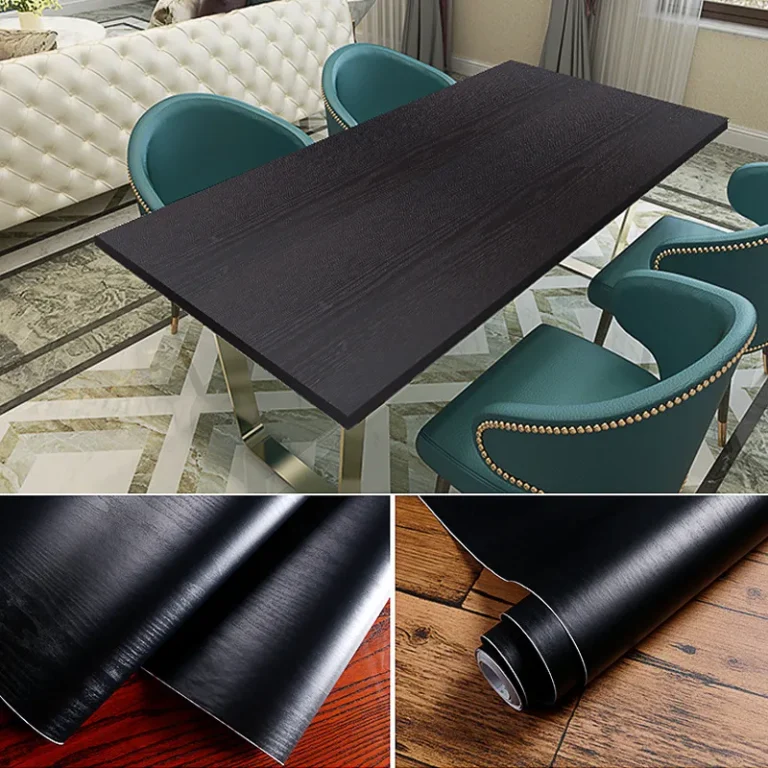
Decorative films: wood grain, marble, metallic, pearlescent finishes for furniture and wall coverings.
Protective films: floor protective film, anti-scratch overlays, and temporary protection tapes.
Functional films: antistatic, waterproof, anti-oil kitchen films, and self-adhesive laminates for home and industrial use.
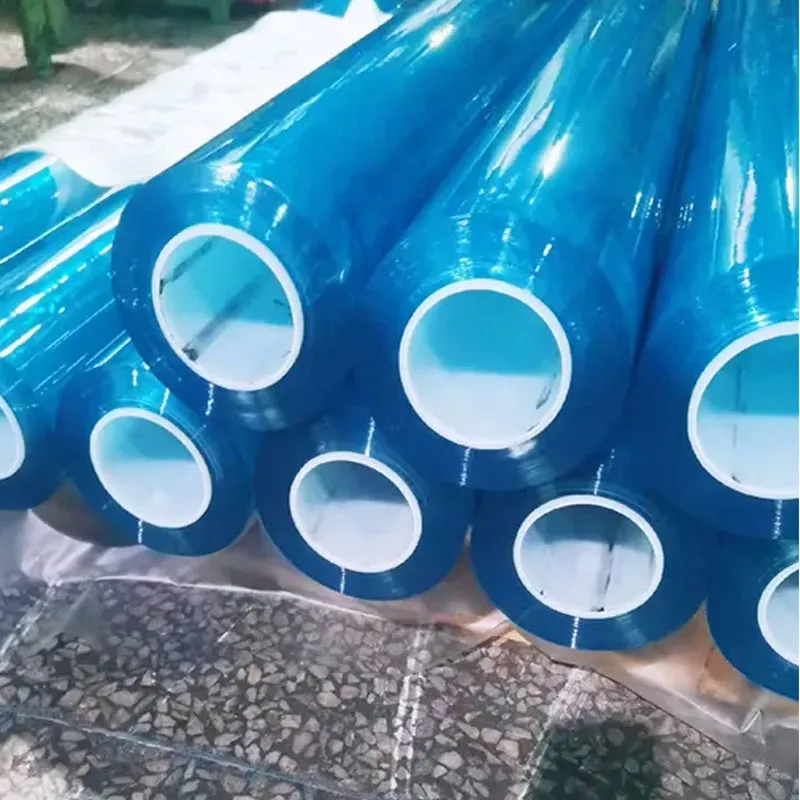
PVC calendered films are widely used in interior decoration (wardrobe and kitchen films), flooring and skirting membranes, automotive surface films, packaging films, and even certain medical or industrial protective films. Their low cost, printable surfaces, and multiple texture options make them attractive for both consumer and B2B markets.
Common defects include gauge variation, flow lines, gels or unmelted particles, surface roughness, and edge waviness. Typical corrective actions:
Gauge fluctuation: check nip gap calibration, roll parallelism, and feed consistency.
Surface defects: clean roll surfaces, inspect compounding for contamination, adjust roll temperatures.
Wrinkling or edge folding: verify winding tension, edge guides, and take-up alignment.
Regular roll polishing, bearing inspections, thermal sensor calibration, and hydraulic system checks prolong equipment life. Implement lockout/tagout procedures for roll maintenance and keep ventilation/filtration for fumes and overspray when printing or treating films. Preventive maintenance schedules tied to production hours are essential for stable output.
When selecting equipment or a production partner consider capacity, customization options (textures, widths, thickness ranges), QC processes, lead times, and export experience. For turnkey production with in-house calendering, printing and packaging capabilities, see Pulivk: https://pvcfilmtec.com/
Modern calender lines can run phthalate-free and low-VOC formulations. Efficient scrap recycling, reclaim systems for trimmings, and proper thermal oxidizer or capture systems during surface treatments help meet regulatory standards and reduce waste.
Successful calendered PVC film production relies on matched material formula, precise roll engineering, and robust process control. Whether producing decorative films for interiors, protective packaging films, or functional specialty films, an optimized calendering line delivers cost-effective, repeatable quality suitable for global markets.