Address
304 North Cardinal St.
Dorchester Center, MA 02124
Work Hours
Monday to Friday: 7AM - 7PM
Weekend: 10AM - 5PM
Address
304 North Cardinal St.
Dorchester Center, MA 02124
Work Hours
Monday to Friday: 7AM - 7PM
Weekend: 10AM - 5PM


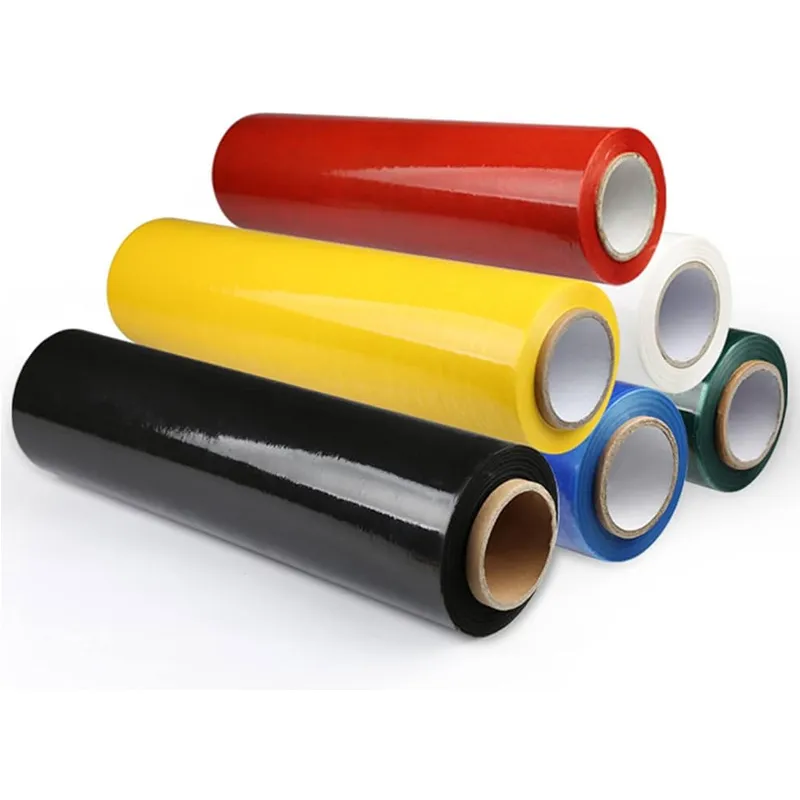
Controlling thickness on PVC calendered film is the foundation of consistent product performance, repeatable printing and lamination, and reduced material waste. This guide explains practical strategies, measurement technologies, and quality practices you can apply on a calender line to deliver reliable thickness every run.
Film thickness impacts mechanical strength, optical properties, printability, and end-use performance. Even small deviations can cause delamination, visible defects on decorative surfaces, or poor adhesion for self-adhesive products. For converters and OEMs, predictable thickness equals predictable cost and quality.
Roll nip settings and roll profile: The geometry and temperature of the calendar rolls determine the initial film gauge. Proper roll conditioning and crown management keep the thickness profile flat across the web.
Material formulation and melt flow: PVC compound viscosity, filler loading and plasticizer content affect how the melt spreads under nip pressure. Consistent raw-material batches reduce thickness drift.
Line speed and feed accuracy: Changes in calender speed or uneven extruder feed amplify thickness variation. Stabilize speed and control volumetric feed precisely.
Temperature control: Roll, head and ambient temperatures change viscosity and cooling rate. Maintain stable setpoints and fast-response heaters/controllers.
Modern calender lines use closed-loop control with continuous gauges. Typical sensor options include:
Beta or X-ray gauges — excellent for multi-layer films and high accuracy through thickness; common for production control.
Laser/optical sensors — non-contact measurement for transparent or glossy surfaces; good for surface-sensitive applications.
Ultrasonic gauges — useful for a range of substrates when contactless measurement is required.
Integrating sensor output into an automated actuator system (nip roll gap, extruder speed, or die lip micro-adjusters) enables real-time correction and less dependence on manual intervention.

Implement a layered QC approach:
Daily start-up checks: zero the gauges, warm up rolls to set temperature, run a short calibration sheet to verify profile.
Shift sampling: compare inline gauge averages to off-line micrometer or lab-grade thickness measurement every 2–4 hours depending on volume.
Preventive maintenance: clean sensor windows, recalibrate actuator links and check roll alignment weekly.
Use SPC to quantify stability and capability. Track running mean, standard deviation, and control limits. Aim for a process capability (Cpk) comfortably above 1.33 for mature production and higher for specialty decorative films. Regularly review trends to catch drift before it affects whole batches.
| Film Type | Typical Thickness Range (µm) | Suggested Tolerance |
|---|---|---|
| Decorative wardrobe & wall films | 80 – 400 | ±3–5% |
| Floor & heavy-duty films | 200 – 1000 | ±3–5% |
| Protective & industrial films | 500 – 2000+ | ±4–6% |
1. Stabilize raw-material batches — consistent resin, plasticizer and filler supply minimizes rheology changes. 2. Invest in closed-loop gauges and actuators for automated correction. 3. Maintain tight temperature and speed control across the line. 4. Develop a robust SPC program and escalation rules for out-of-tolerance events.
When specifying calendered PVC film, ask suppliers about their inline measurement technology, documented SPC capability, and calibration frequency. Request trial runs and thickness maps across sample rolls to validate profile uniformity before large orders.
Products manufactured and tested at Pulivk follow full in-house production and QC practices to help customers achieve consistent thickness and on-time delivery.