Address
304 North Cardinal St.
Dorchester Center, MA 02124
Work Hours
Monday to Friday: 7AM - 7PM
Weekend: 10AM - 5PM
Address
304 North Cardinal St.
Dorchester Center, MA 02124
Work Hours
Monday to Friday: 7AM - 7PM
Weekend: 10AM - 5PM



In the intricate world of industrial materials and protective solutions, few products combine functionality with clarity as effectively as Anti Static Transparent PVC Protective Film Tape. This specialized tape is engineered to address a critical challenge in modern manufacturing, electronics, and packaging: the control of static electricity while providing a clear, protective barrier. Its unique properties make it indispensable in environments where both visibility and electrostatic discharge (ESD) protection are paramount.
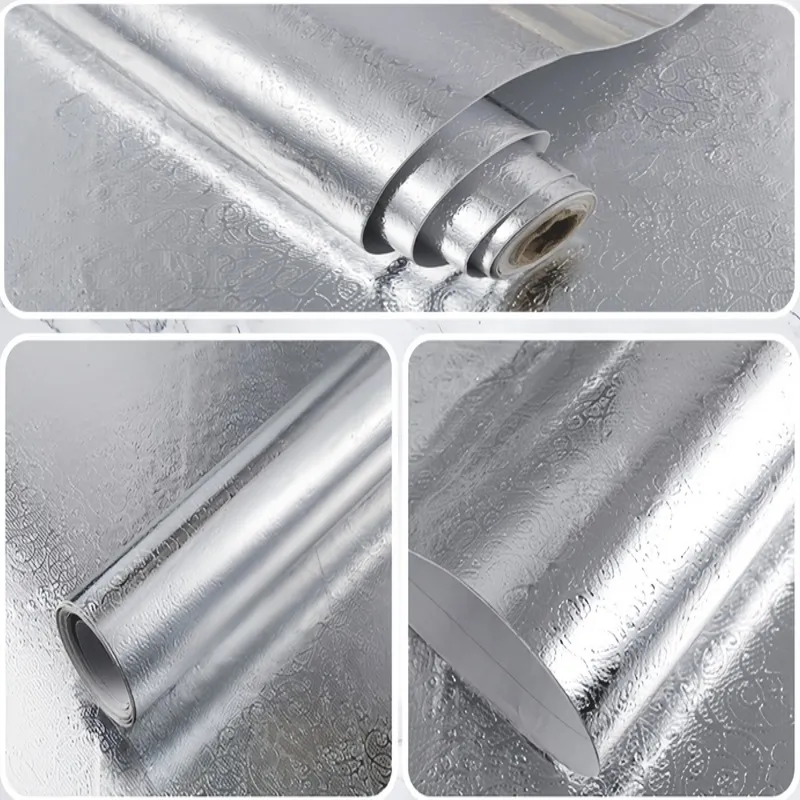
At its core, Anti Static Transparent PVC Protective Film Tape is a multi-layered marvel. It begins with a base of flexible Polyvinyl Chloride (PVC), renowned for its durability, clarity, and conformability. The key differentiator is the incorporation of anti-static agents—either embedded within the PVC matrix or applied as a specialized coating. This formulation ensures the tape’s surface resistivity is lowered, allowing static charges to dissipate safely rather than accumulate. The result is a crystal-clear tape that protects sensitive surfaces from dust, scratches, and moisture, while simultaneously preventing the damaging effects of ESD, such as component failure in electronics or ignition risks in flammable environments.
Core Composition & Mechanism: The anti-static property is not a superficial treatment but an integral characteristic. It works by attracting atmospheric moisture to its surface, creating a thin conductive layer that neutralizes static charges. This makes it a permanent solution, unlike topical sprays that wear off.
The effectiveness of this tape stems from a combination of targeted properties:
The application spectrum for Anti Static Transparent PVC Tape is vast, cutting across multiple high-tech and precision industries.
This is the quintessential application. The tape is used to protect LCD screens, touch panels, optical lenses, and printed circuit boards (PCBs) during manufacturing, assembly, and shipping. It prevents static attraction of dust and protects against scratches. For instance, it is applied to smartphone screens immediately after production, remaining in place until the device reaches the end-user.
Static-sensitive devices like integrated circuits (ICs), hard drives, and memory modules are often wrapped or sealed with this tape in their packaging. It creates a static-safe environment within the package, a critical step in ESD-protective packaging protocols.
During the installation of dashboard electronics, infotainment screens, and instrument clusters, the tape protects glossy and touch-sensitive surfaces from tool marks and contamination. Its clarity allows installers to see alignment marks and indicators through the tape.
Used in the production and packaging of diagnostic equipment, surgical device displays, and other sensitive medical electronics where cleanliness and static control are non-negotiable for safety and functionality.
Ideal for protecting windows, display cases, acrylic sheets, and signage during transport, construction, or renovation. The anti-static property is key here, as it prevents the tape itself from attracting dust and lint, which can be trapped underneath and mar the surface upon removal.
Not all anti-static tapes are created equal. Selection should be based on several factors:
To maximize performance, correct handling is essential. Always apply the tape to a clean, dry, and grease-free surface. Use a squeegee or similar tool to smooth out the tape from the center outward, eliminating air bubbles that can compromise adhesion and protection. For removal, peel slowly at a 180-degree angle. If residue is a concern, warming the tape slightly with a heat gun can soften the adhesive for cleaner removal. For large-scale industrial use, automated dispensing and application systems ensure consistency and efficiency.
At Pulivk Film, our expertise in PVC film technology extends to specialized products like Anti Static Transparent Protective Film Tape. Our integrated production process—from calendering the base film to applying precise anti-static treatments—ensures unparalleled quality control. We understand that such tapes are not mere commodities but critical components in your supply chain. That’s why we offer comprehensive OEM/ODM services, allowing us to tailor the tape’s thickness, width, adhesion level, and anti-static properties to your exact application, whether it’s for protecting delicate decorative surfaces or high-value electronic components.
Our commitment to innovation means we continuously refine our formulations to meet evolving industry standards for ESD safety and environmental compliance, including RoHS and REACH directives.
Anti-static tape (like the one described) is designed to prevent the buildup of static charges and dissipate them slowly. It is used for general static control. Conductive tape has much lower resistivity and is used to ground components or create a Faraday cage, providing a path for static to flow directly to ground. The choice depends on the specific ESD protocol required.
While it offers good durability, standard Anti Static Transparent PVC Tape is not specifically formulated for prolonged UV exposure. Extended outdoor use can lead to yellowing, adhesive degradation, and reduced anti-static performance. For outdoor applications, inquire about UV-stabilized and weather-resistant variants.
The most reliable method is to use a surface resistivity meter to measure the tape’s resistance in ohms per square (Ω/sq). A simple field test involves seeing if the tape attracts small pieces of paper or lint; a properly functioning anti-static tape should not attract such materials.
Not universally. Some plastics, like polypropylene (PP) or polyethylene (PE), have very low surface energy, making adhesion difficult. For these substrates, a specially formulated adhesive is required. Always conduct a small-scale adhesion and residue test on the target material before full-scale application.
Yes, to some degree. The anti-static mechanism often relies on absorbing a minute amount of moisture from the air to create a conductive path. In extremely dry environments (low humidity), the dissipation rate may slow slightly. For critical applications in controlled dry environments, specify this requirement so a formulation less dependent on humidity can be recommended.